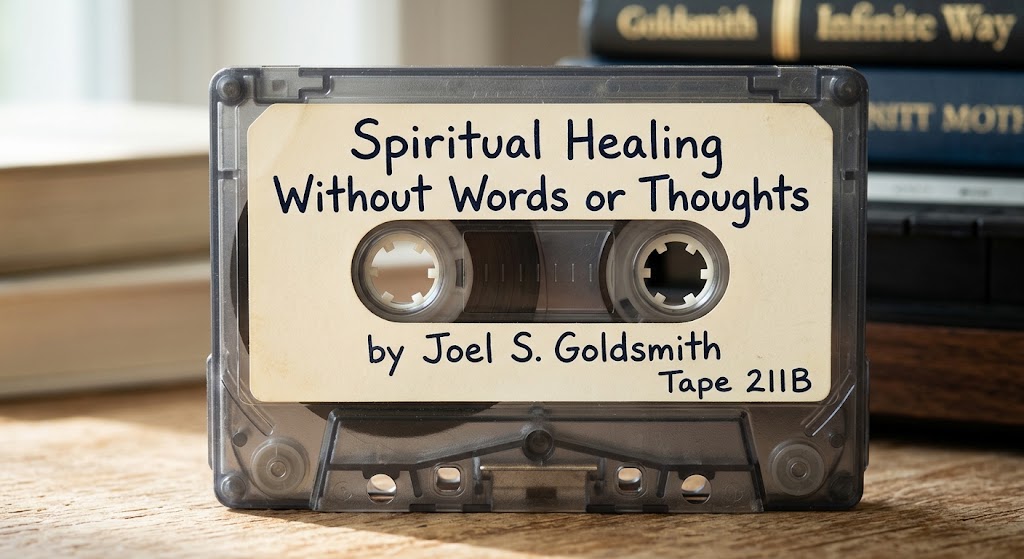
“Spiritual Healing Without Words or Thoughts”
1958 Second Chicago Closed Class
by Joel S. Goldsmith
Tape 211B
Detailed Summary (getrecall.ai)
Foundations of Spiritual Healing
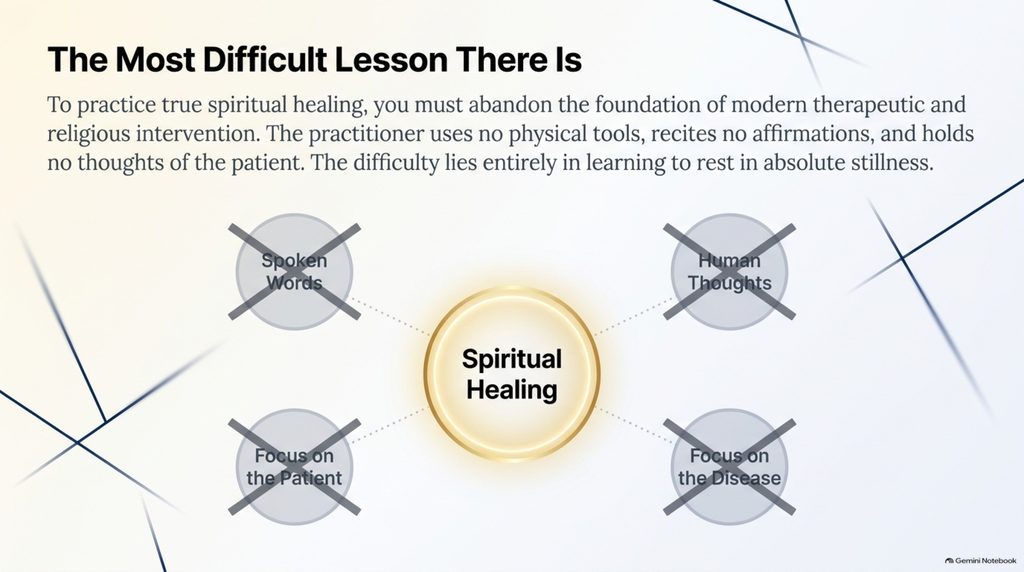
- The lesson presented is considered the most difficult within the teachings of the Infinite Way, both to convey and to receive, with the greatest challenge being its practical application (00:00:22).
- Spiritual healing is defined as a process that occurs without the use of words or thoughts (00:01:15).
- The primary difficulty in spiritual healing lies in understanding the specific foundation upon which it is built (00:01:35).
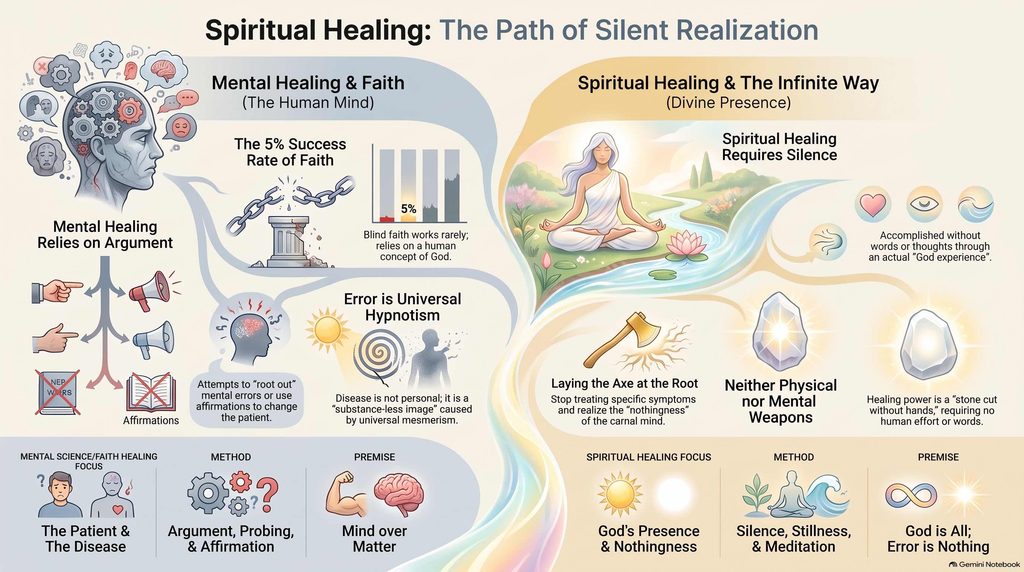
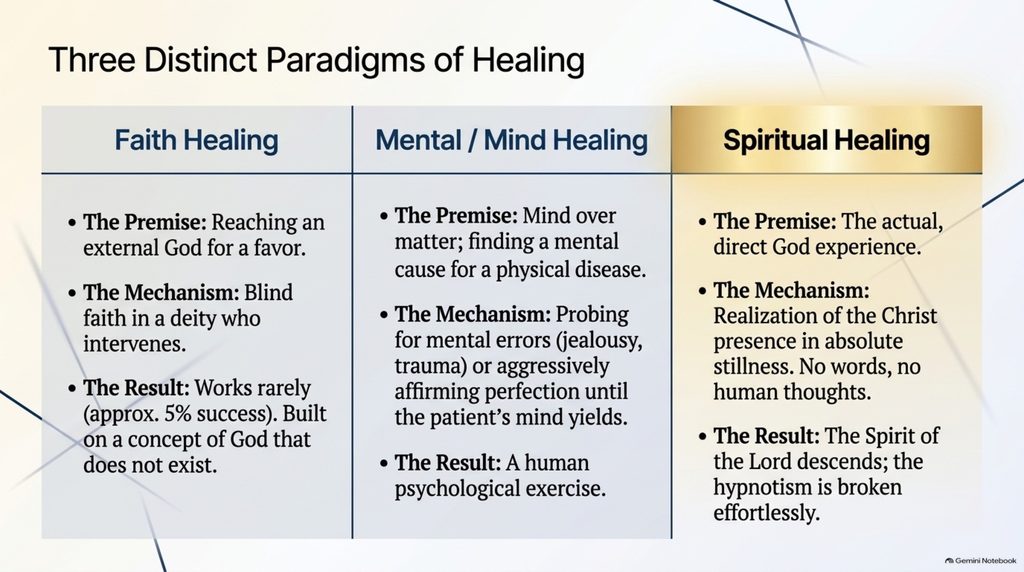
- Spiritual healing is distinct from faith healing and mental healing (00:01:59).
Limitations of Faith and Mental Healing
- Faith healing, including evangelical healing, relies on the conviction that a holy person can reach a concept of God to secure a healing, a method that reportedly succeeds approximately five percent of the time (00:02:15).
- Faith healing is characterized as being based on a concept of God that does not exist, specifically the belief in a deity that intervenes to favor certain individuals over others (00:02:56).
- Mental healing is based on the premise that physical disease has a mental cause, which is addressed through psychology, psychiatry, or mental science (00:03:40).
- Mental healing often involves the belief that a person’s illness is the result of a mental error, such as a lack of love, generosity, or gratitude, and that correcting these behaviors will lead to healing (00:04:11).
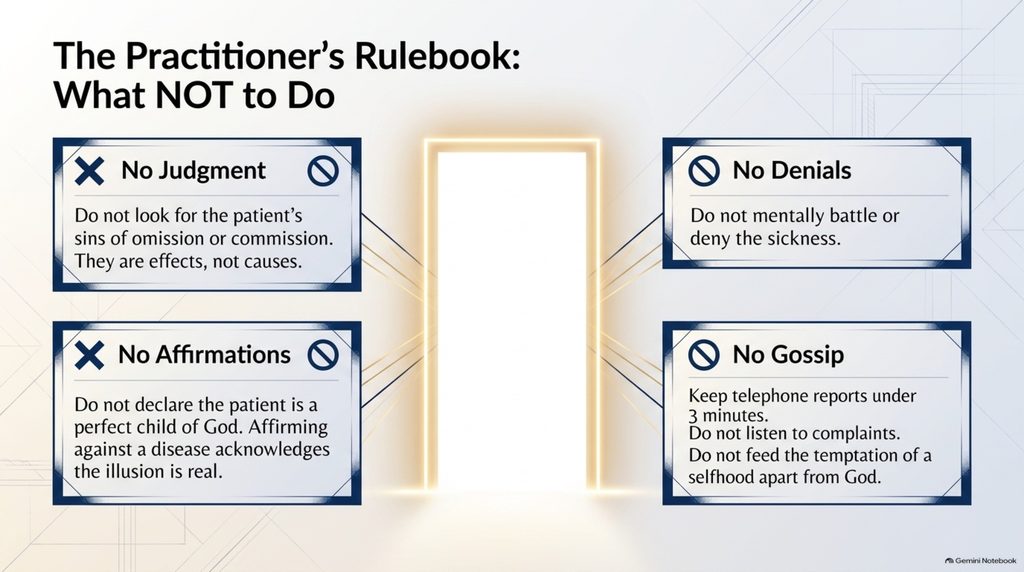
- Mental treatment often involves directing affirmations toward an individual, such as declaring them to be God’s perfect child, in an attempt to force them to become what the practitioner describes (00:05:14).
- Mental treatments frequently incorporate the specific name of the individual or the name of the disease being treated (00:06:03).
- Mental treatment often functions as a process of mind over mind or mind over matter, where a practitioner argues against a patient’s condition until the patient’s mind yields and accepts a state of wellness (00:06:21).
- A common method in mental science involves “uncovering the error,” which attempts to link specific human traits or behaviors, such as jealousy or sensuality, to physical ailments like cancer or tuberculosis (00:07:02).
The Nature of Spiritual Realization
- Spiritual healing is distinct from mental science because it does not rely on human thoughts, words, or metaphysical quotations (00:07:32).
- The foundation of spiritual healing is the actual experience of God, requiring a realization of the Christ or the presence of God (00:07:52).
- Effective spiritual healing occurs through the direct activity of God, which can manifest when the spirit of the Lord God is upon the practitioner (00:08:14).
- When the spirit of God is present, healing can occur regardless of whether the practitioner has a conscious awareness of the process (00:08:41).
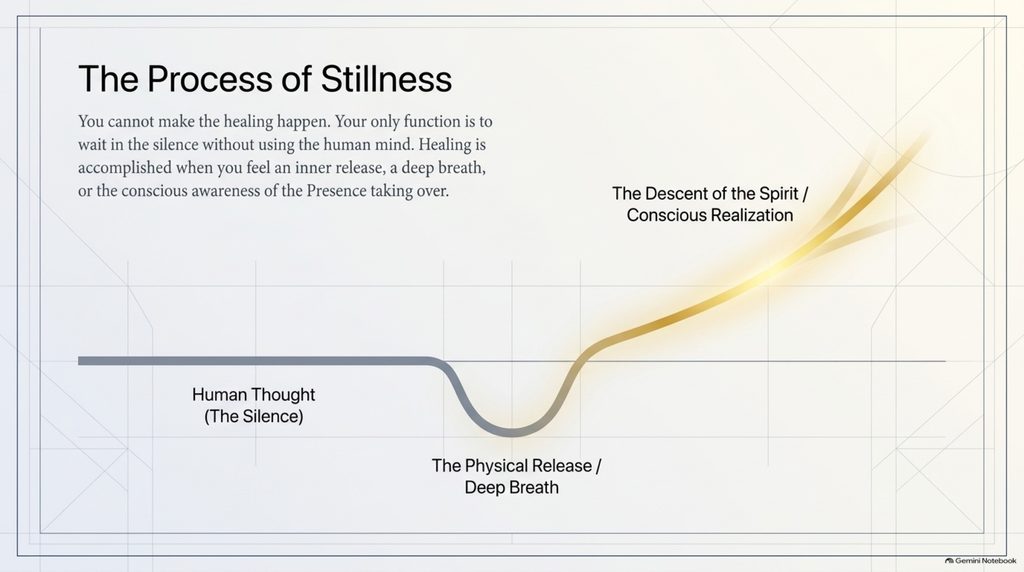
- The core of spiritual healing is the ability to be still and wait for the conscious realization of God’s presence to take place (00:09:08).
- One path to spiritual healing involves a transformative experience where an individual is lifted out of worldly concerns, leading to a life centered on inner truth and spiritual study (00:09:41).
- Following such an experience, a practitioner may feel an inner release or a deep breath during meditation, which often results in the relief or healing of a patient (00:10:22).
Practitioner Approaches and Experiences
- Many practitioners operate from the standpoint of “treatment,” which involves addressing the patient by name and disease while using verbal affirmations to declare the patient’s spiritual perfection (00:10:56).
- A practitioner may experience the presence of God and facilitate healing without initially possessing a conceptual understanding of what that presence is or how the healing occurs (00:11:24).
- The desire to understand the underlying principles of these healing experiences often leads practitioners to search for the specific mechanism behind the process (00:12:02).
- An individual reported an instantaneous recovery from severe pain after a brief interaction, noting that the relief occurred without the practitioner needing to close their eyes (00:12:16).
- A man in the final stages of tuberculosis, who had been sent home by doctors with no hope for recovery, sought assistance and requested treatment for both his condition and pyorrhea, a dental issue that prevented him from eating solid food (00:12:48).
- During the treatment session, the practitioner focused solely on the tuberculosis and completely forgot about the man’s dental condition (00:13:32).
- The following morning, the man reported that his teeth were solid and no longer loose, despite his attempts to move them with a stiff toothbrush (00:13:44).
- These experiences prompted a multi-year investigation into the nature of spiritual healing to understand the underlying mechanisms (00:14:13).
Universal Hypnotism as the Root Cause
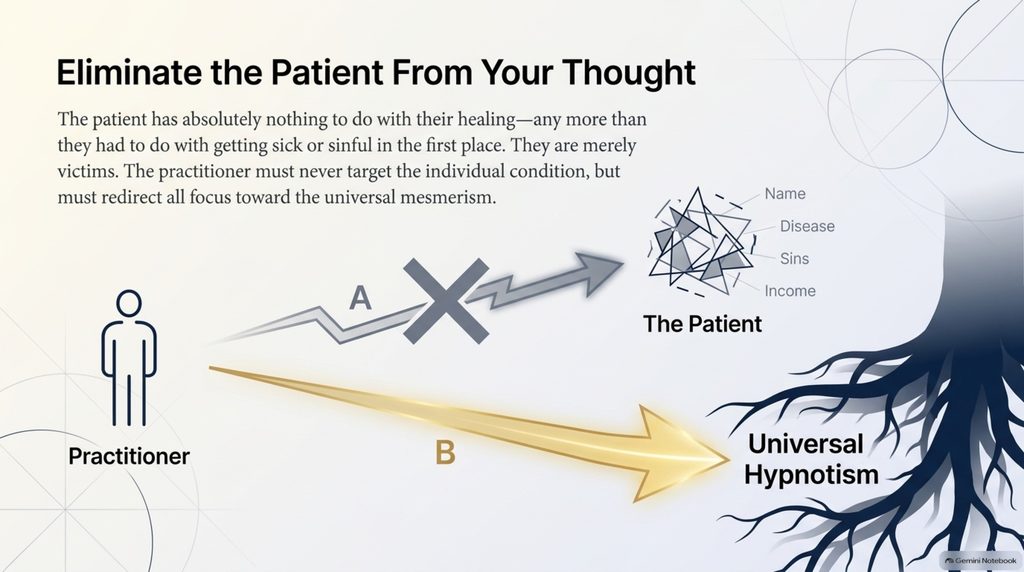
- Healing is not dependent on the individual patient, as the patient’s identity, specific disease, sin, or circumstances like unemployment are irrelevant to the process (00:14:42).
- Individuals do not cause their own sickness, sin, or death, as these conditions are manifestations of a universal mind, often referred to as hypnotism or mesmerism (00:15:18).
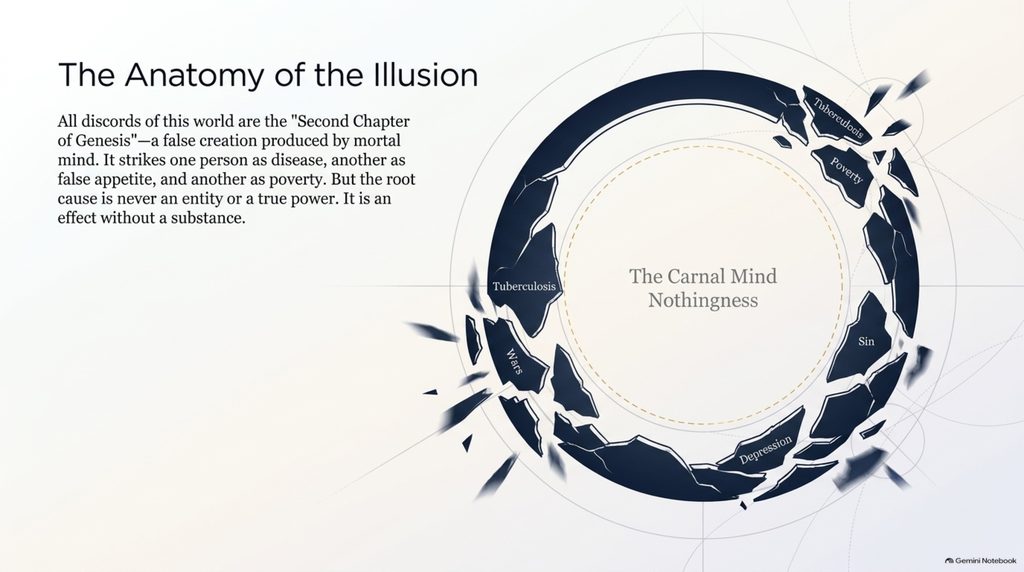
- Universal hypnotism affects everyone by virtue of birth, manifesting in various forms such as disease, false appetite, sensuality, poverty, or other limitations (00:15:53).
- The practitioner’s role is to address the root of this universal mesmerism rather than attempting to treat individual symptoms or specific manifestations (00:17:06).
- Healing requires addressing the root cause rather than focusing on personal conditions, as the underlying issue is universal hypnotism (00:17:24).
- Universal hypnotism is identified as the second chapter of Genesis, which produced the false creation known as mortal man (00:17:38).
- God did not create disease, nor did God ordain laws of disease or cause them to spread (00:17:54).
The Ineffectiveness of Personal Diagnosis
- Psychology and psychiatry are ineffective at healing because they operate on the wrong premise by searching for errors within the patient’s mind (00:18:25).
- Blaming a patient’s thinking or their parents for a condition is considered a mistake, as the patient is not responsible for the universal hypnotism (00:18:42).
- Practitioners must stop looking to the patient to do or be something specific in order to achieve healing (00:19:11).
- While students of this path are expected to uphold certain standards in their own lives, they should not sit in judgment or criticize patients for their past actions or faults (00:19:30).
- Faults such as adultery or theft are considered effects rather than causes, and no effect can function as a cause (00:20:13).
- The true cause behind all human faults and failures is universal hypnotism, which Paul referred to as the carnal mind (00:20:39).
The Nothingness of the Carnal Mind
- The carnal mind is not an entity or an identity, but rather a nothingness (00:21:07).
- Paul may have struggled because he viewed the carnal mind as an entity to be battled, whereas Jesus understood it as nothingness (00:21:39).
- Jesus demonstrated the nothingness of conditions like blindness and leprosy through his actions, showing that these states possess no actual power (00:22:03).
- Displaying personal power or wisdom in healing is a mistake, as demonstrated by the biblical account of Peter and John at the temple gate, where they attributed the healing to the spirit of God rather than their own understanding (00:22:29).
- A spiritual healer is defined as an individual who recognizes that they are not dealing with specific conditions like cancer, polio, old age, or prenatal influences, but rather with the carnal mind, which is nothingness (00:23:08).
- The metaphysical world could have been saved if students had consistently maintained that mortal mind is the sum total of all error and a term denoting nothingness (00:23:34).
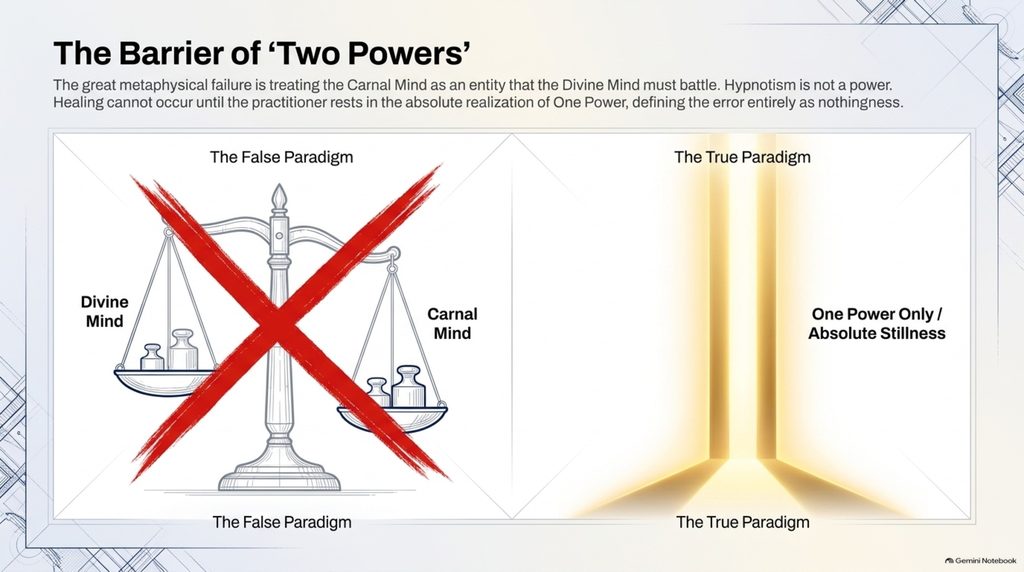
- Instead of treating mortal mind as nothingness, many have mistakenly treated it as an entity that divine mind must act upon, thereby creating a false duality (00:24:02).
Breaking the Illusion of Mental Images
- Terms such as hypnotism, mesmerism, and suggestion are not entities or identities, but rather processes that create mental images lacking substance, law, or cause (00:24:28).
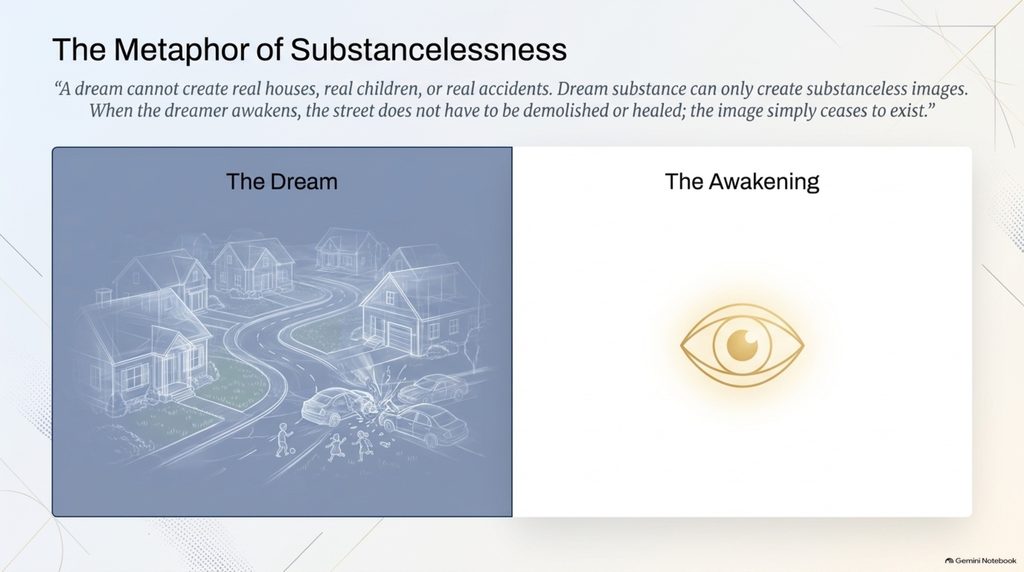
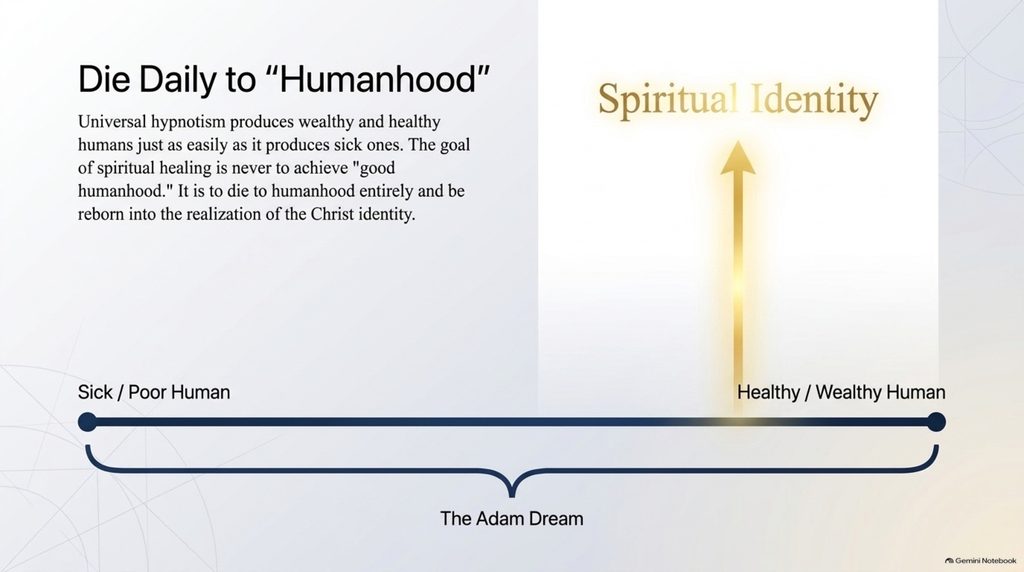
- The concept of the “Adam dream” illustrates how a mental image can appear real, such as imagining a street scene with houses and children, yet vanish instantly upon waking because a dream cannot create actual substance (00:24:47).
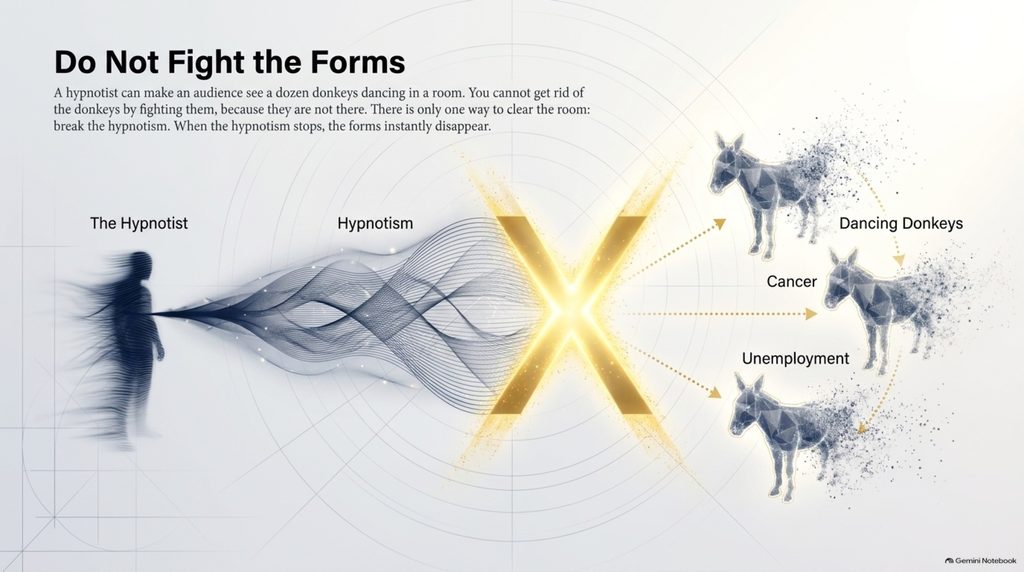
- Just as a hypnotist might make someone see dancing donkeys that do not exist, the only way to remove such images is to break the hypnotism itself (00:26:12).
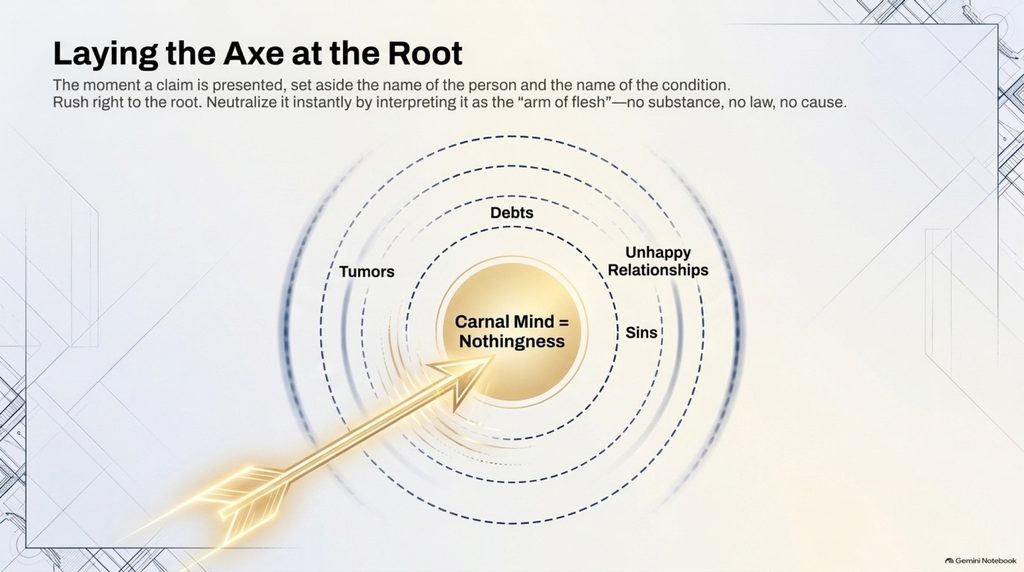
- Whether a claim is named after a person or a condition like cancer, unemployment, or unhappy relationships, one should not focus on the specific claim but rather address the “substance-less substance” behind it (00:26:33).
- Any label—such as carnal mind, mortal mind, hypnotism, or the Adam dream—is acceptable as long as it is interpreted as meaning nothingness, lacking substance, law, or cause (00:26:53).
Guidelines for Practitioner Communication
- Effective spiritual treatment requires eliminating the patient’s mind and their specific claims from one’s thoughts and rushing directly to the root, which is the carnal mind (00:27:23).
- Conscious awareness of a spiritual presence within is achieved by recognizing the “arm of flesh” as nothingness and removing the barrier of believing in two powers or anything apart from God. (00:27:45)
- To pray effectively, one must approach the altar in a state of purity and peace, which requires viewing others not as sick, sinful, or in bondage, but as the beloved son of God. (00:28:16)
- Any report of illness or discord is considered a “temptation” to be rejected by affirming the nothingness of the flesh, regardless of the age or nature of the condition. (00:28:48)
- When individuals share their problems, the goal is to allow them to express their concerns briefly so they can be released, rather than allowing the listener to dwell on the details. (00:29:23)
- Consultations are limited to five or six minutes because the objective is to move quickly into meditation rather than filling the mind with stories about a dream that has no existence. (00:29:42)
- Telephone calls regarding illness are restricted to a maximum of three minutes to avoid the “gossiping” of rumors or the acceptance of temptations that suggest a self or law apart from God. (00:30:14)
- Believing in the reality of reported problems would result in the “blind leading the blind,” making it necessary to handle such communications with brevity. (00:30:50)
- Written correspondence regarding personal complaints or conditions should be brief, as lengthy accounts of discord are not read; the focus should be on stating the condition simply so it can be addressed and discarded. (00:30:58)
True Identity and the Adam Dream
- Spiritual healing is accomplished solely through an actual God realization, which is facilitated by ignoring the specific person, condition, or thing and addressing the root of the issue as a mere picture. (00:31:53)
- Universal mesmerism, hypnotism, and the second chapter of Genesis represent a creation attributed to the mind of man rather than God, characterized by material processes and the naming of objects (00:32:20).
- In the true creation of God, light existed before the sun and crops existed before seeds were planted, indicating an absence of material processes (00:32:46).
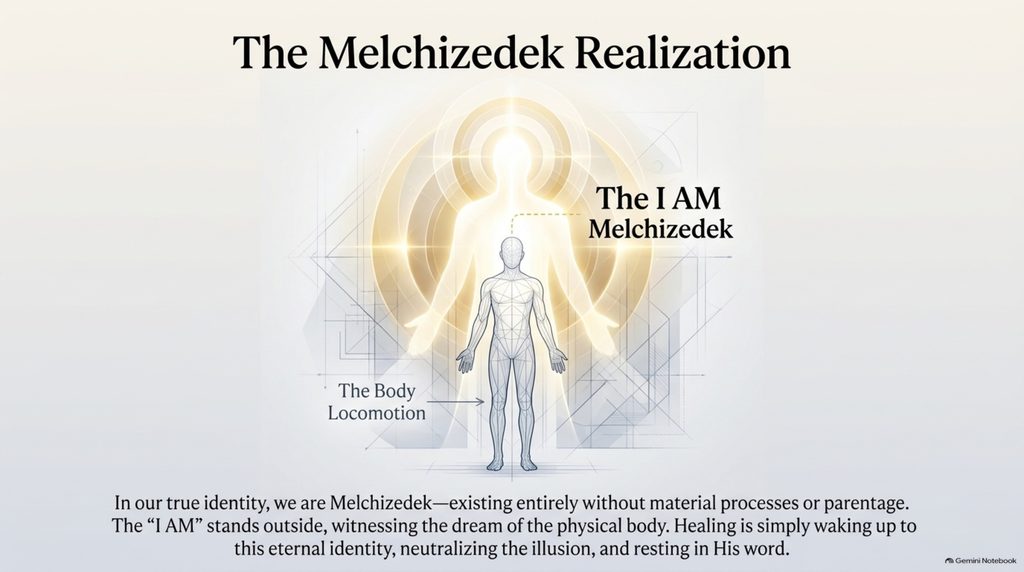
- The secret of Melchizedek is defined by the absence of material processes, such as having no mother or father, which serves as a model for true human identity (00:32:59).
- While the “Adam dream” involves the experience of incarnation, true identity exists independently of birth and material processes (00:33:16).
- An “I” or true identity exists that witnesses the experiences of the physical body, including birth, life, and the eventual passing on, without being identified with those physical events (00:33:33).
- The physical body is described as a form assumed within a dream for the purpose of locomotion, while the true self remains behind the eyes (00:35:48).
- Claiming to be physical, mortal, material, sick, or well is described as speaking from the standpoint of the dream (00:36:05).
Practicing Stillness and Christ-hood
- By maintaining the awareness of “I am” and recognizing the other as the beloved son of God, one avoids the need for traditional treatments or focusing on the carnal mind (00:36:20).
- The carnal mind is characterized as the “arm of flesh” or nothingness, and the goal is to avoid creating a duality where the carnal mind is viewed as an opposite power to the divine mind (00:36:37).
- The practice of resting in the word involves nullifying the carnal mind to allow the spirit of the Lord God to break the state of hypnotism (00:37:09).
- All forms of sin, disease, death, lack, limitation, and depression are identified as manifestations of mesmeric sense or hypnotism (00:37:49).
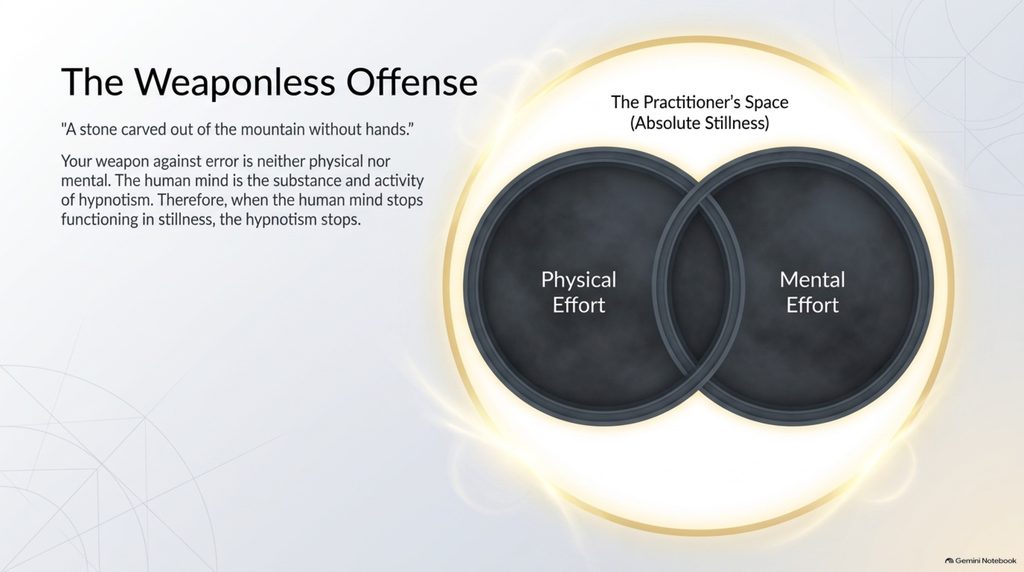
- Breaking this hypnotism cannot be achieved through physical or mental methods, as one is not permitted to use physical actions or thoughts to influence the state (00:38:05).
- The weapon used to combat error is described as something that is neither physical nor mental, a concept likened to a stone carved out of a mountain without hands (00:38:32).
- The human mind is characterized as the substance and activity of hypnotism; therefore, when the human mind stops functioning and one remains in stillness without words or thoughts, the hypnotism ceases (00:41:02).
- Upon exiting this state of stillness, individuals may experience a sense of release, a deep breath, a feeling of presence, or the hearing of words, though listening for specific words is not necessary (00:41:33).
Transcending Humanhood and Material Health
- A distinction is made between treating only sickness or sin and recognizing that all humanhood—whether healthy, wealthy, sick, or sinful—is part of the same mesmerism (00:42:28).
- Healing can be facilitated by clinging steadfastly to the idea of man’s Christ-hood rather than focusing solely on the illusion of humanhood (00:43:06).
- The teaching to “die daily” refers to the necessity of dying to one’s humanhood to be reborn of the spirit, which changes the basis of life rather than the outer appearance or identity (00:43:40).
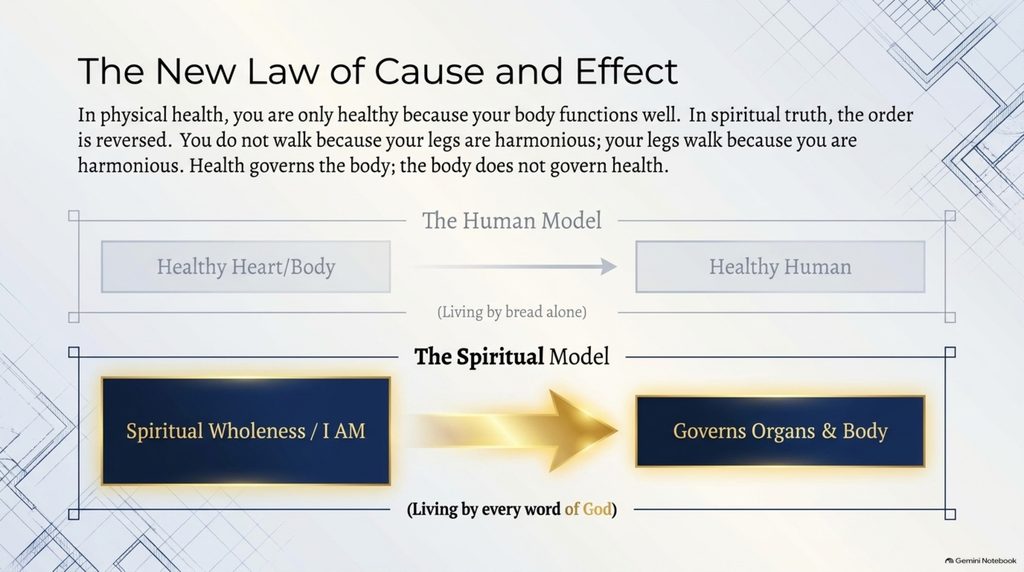
- Believing that health is derived from the proper functioning of physical organs is considered a limited perspective, as all human health is still part of the human experience (00:44:03).
- Physical health is subject to change and is not the ultimate aim of spiritual living. (00:44:29)
- The goal of spiritual living is to realize one’s spiritual identity in Christ, where wholeness governs the body rather than the body governing health. (00:44:41)
- An earthly man lives by material means such as bread, vitamins, and minerals, whereas a spiritual man lives by every word that proceeds from the mouth of God. (00:45:37)
- Abiding in the word of God allows that word to take over the organs and functions of the body. (00:46:02)
Prioritizing Spiritual Light Over External Conditions
- It is a common error to make spirituality dependent on achieving good states of mortality, such as waiting for pain to stop or bills to be paid before focusing on spiritual growth. (00:46:45)
- True spiritual progress requires reversing this perspective: one must attain spiritual light first, which then influences external conditions like health and finances. (00:47:23)
- To practice spiritual healing, one must lay the axe at the root by setting aside the specific person, their name, and the nature of their claim. (00:47:38)
- The practitioner should view the claim as nothingness—not something to be fought or risen above—so that only one power remains. (00:47:53)
- Engaging in this meditation leads to the descent of the holy ghost, a sense of peace that passes understanding, and a release from fear or discord. (00:48:48)
- If a patient reports feeling worse, it may simply be a stirring up of the condition, which does not negate the effectiveness of the spiritual work. (00:49:08)
- Practitioners should avoid focusing on the patient’s personality or past, present, or future sins. (00:49:20)
- Using terms like “carnal mind,” “mortal mind,” “hypnotism,” or “arm of flesh” can help the practitioner recognize the nothingness and lack of power in a claim. (00:49:39)
Conscious Realization in Treatment
- When beginning a treatment or realization, it is essential to stand as a porter at the door of one’s consciousness. (00:50:18)
- When entering into meditation or treatment, it is essential to consciously remember that the purpose is not to change, heal, reform, or correct any person or condition (00:50:24).
- The practitioner should establish clearly that the meditation does not involve a specific person or a specific condition (00:50:40).
- Treatment is not directed toward the individual or their circumstances, but rather toward realizing a spiritual presence in the immediate environment (00:50:45).
- Engaging in denials or affirmations regarding a person or their condition keeps the practitioner within the same “atom dream” as the individual, which is described as the blind leading the blind (00:51:25).
- Because any denial or affirmation would relate to the human being and their condition, the practitioner must avoid them entirely (00:51:30).
- The process should open with the realization that neither circumcision nor uncircumcision, nor good health nor bad health, are of consequence (00:51:54).
- The focus of prayer or treatment must remain exclusively on the realization of God and the Christ, the Son of God, rather than on the specific issue presented (00:52:01).
The Omnipotence of God as the Final Reality
- Spiritual healing without words or thoughts is founded on the understanding that the nature of error is purely an illusion (00:53:06).
- Error is defined as a hypnotic suggestion of a selfhood, identity, law, life, activity, presence, or power that exists apart from God (00:53:14).
- Once the practitioner realizes that God is omniscience, omnipresence, and omnipotence, they no longer engage with any contradictory pictures or conditions that may present themselves (00:53:41).
Ai Infrographics (notebookLM)