What does Joel S. Goldsmith teach about Prayer?
NotebookLM, based on this Source:
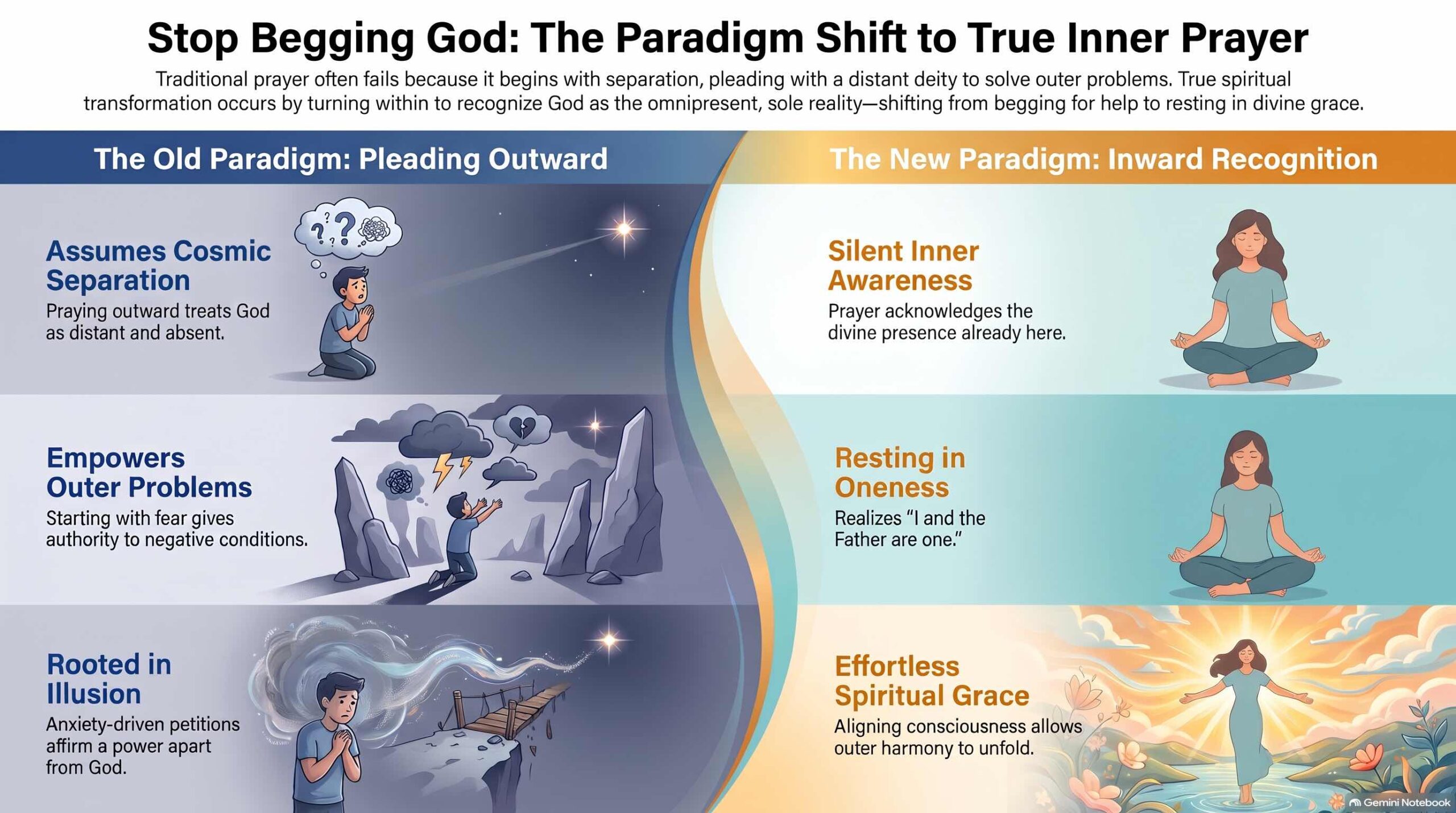
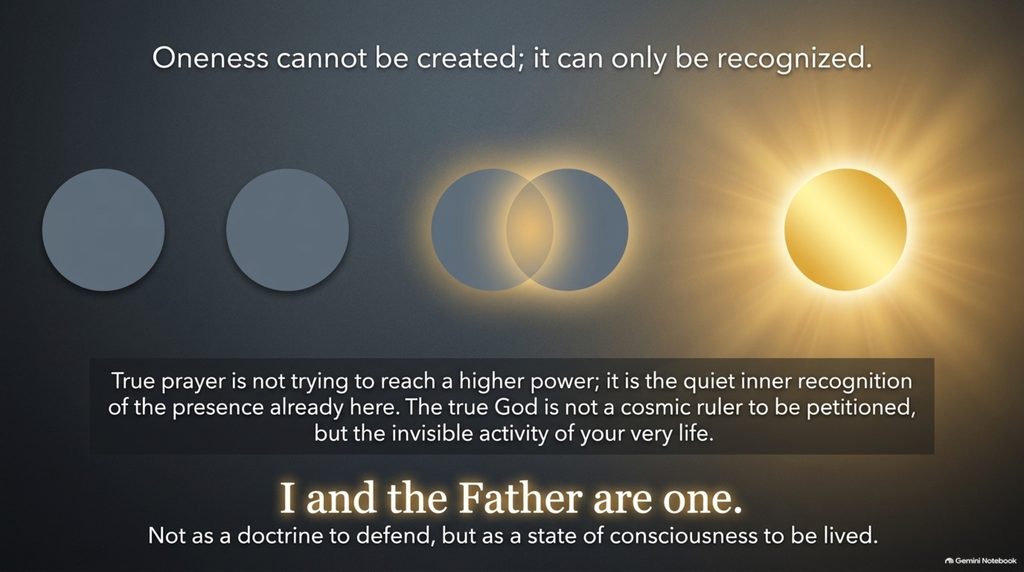
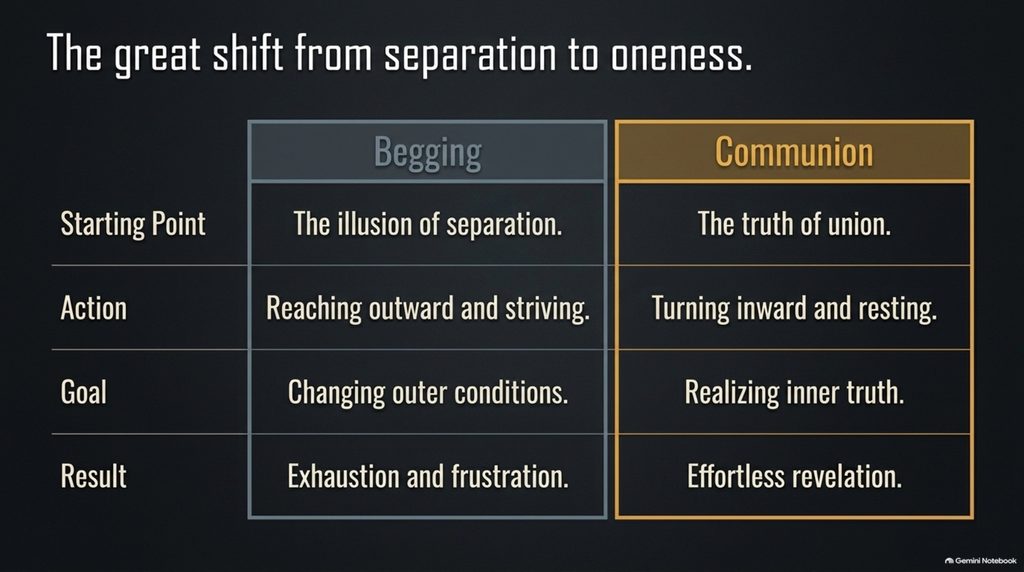
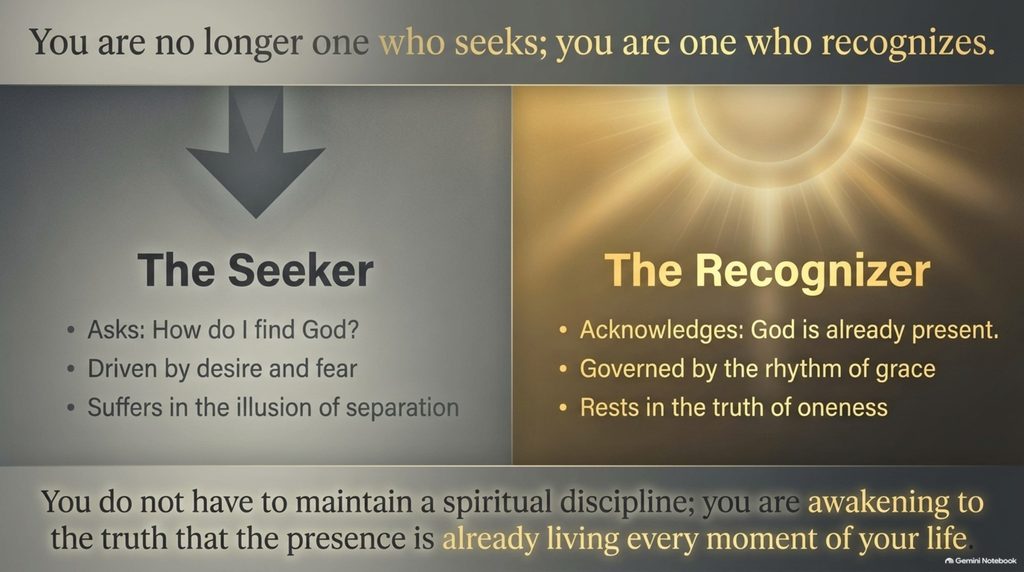
In Joel S. Goldsmith’s teaching, most human prayer is based on a fundamental misunderstanding: humanity has traditionally treated prayer as begging, pleading, or reaching outward to a distant God to ask for intervention, healing, or supply. True prayer, however, is a quiet inner recognition of the divine Presence already here.
1. The Error of Traditional Prayer: Begging and Separation
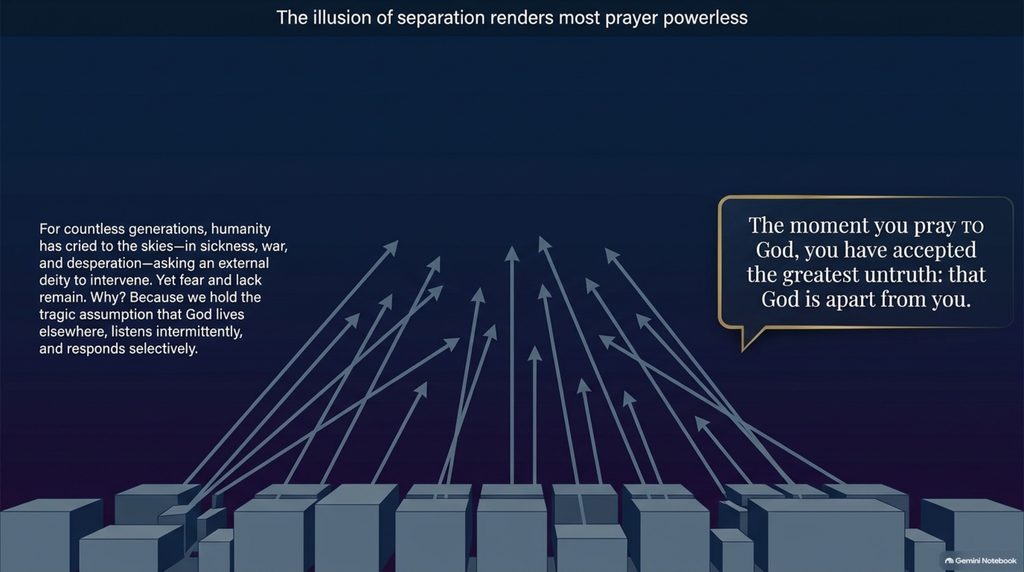
- Belief in Separation: Most prayer begins with the assumption that God is separate from the individual, living elsewhere, and needing to be persuaded or awakened to human needs. Starting prayer from a state of separation renders it powerless.
- Praying at God: Reaching outward or repeating rituals hoping to impress a distant God fails because God is not an external power to be petitioned, but the very essence of one’s being.
2. The Shift: “Seeking First” vs. “Seeking Second”
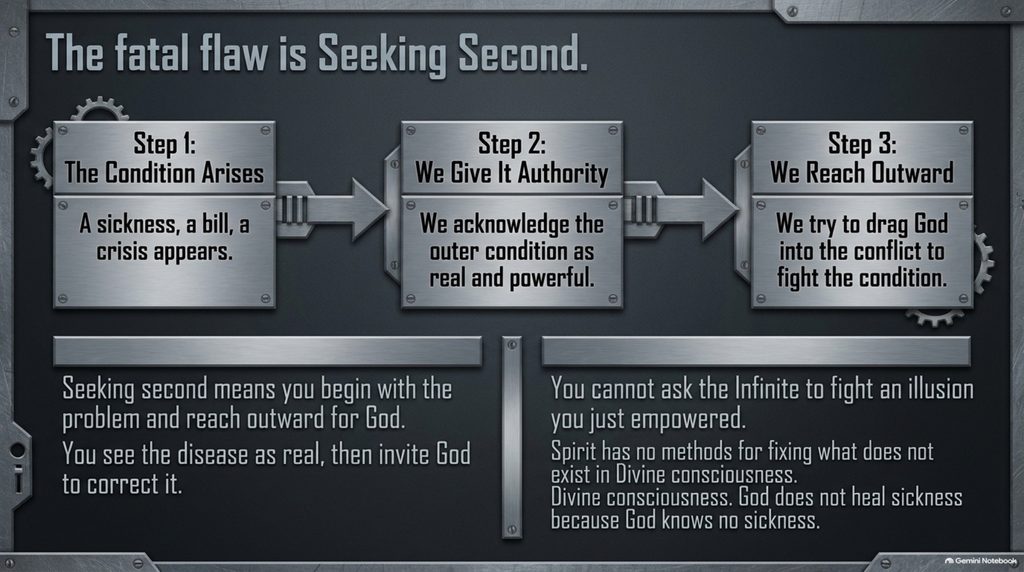
- “Seeking Second”: Most people pray only after encountering a problem—such as a sickness, bill, or crisis—and then try to drag God into the condition. This gives authority and reality to the problem, asking God to fight something established as powerful.
- God Does Not Know Problems: Spirit has no methods for fixing conditions it does not recognize; God does not heal sickness or mend lack because God knows no sickness or lack. Praying from the standpoint of a problem attempts to engage God with an illusion.
- “Seeking First”: True prayer starts with God as the only presence, power, and reality before acknowledging any outer appearance. It shifts the approach from trying to change a situation to recognizing that God, being all, leaves no room for an opposing power.
3. Prayer as Inner Recognition and Oneness
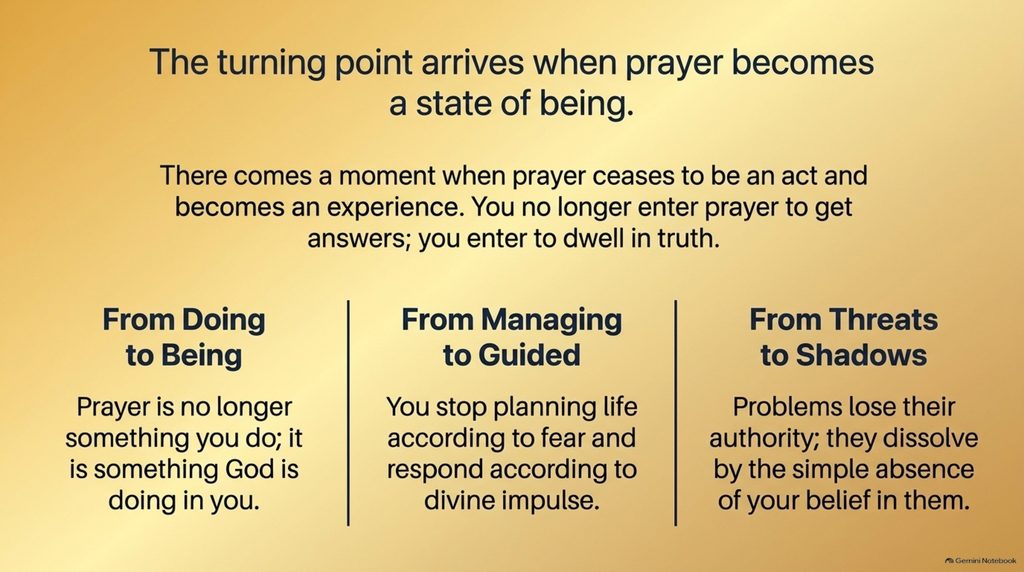
- Praying From God: True prayer shifts from praying at God to praying from God—from the quiet realization that “I and the Father are one”.
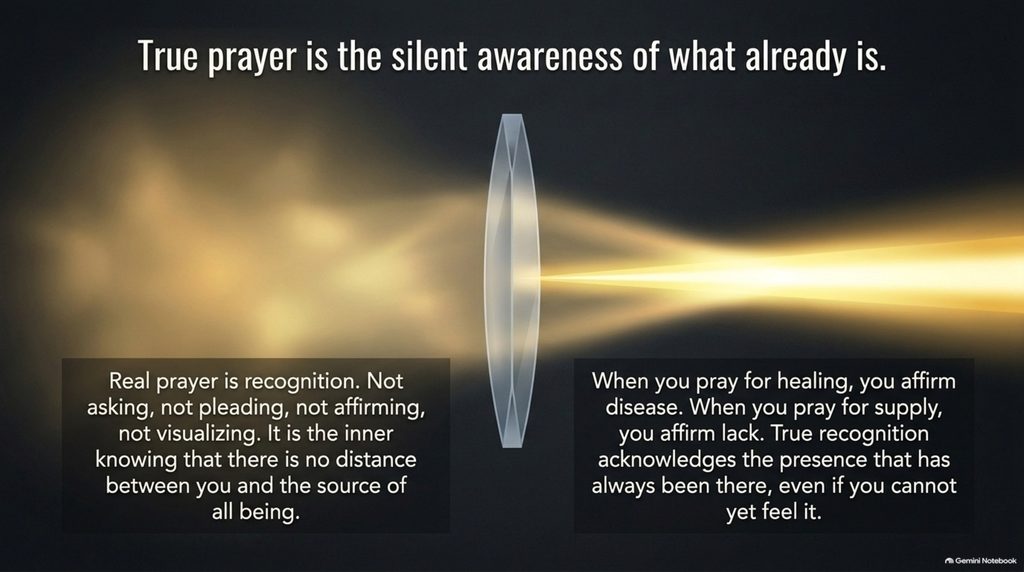
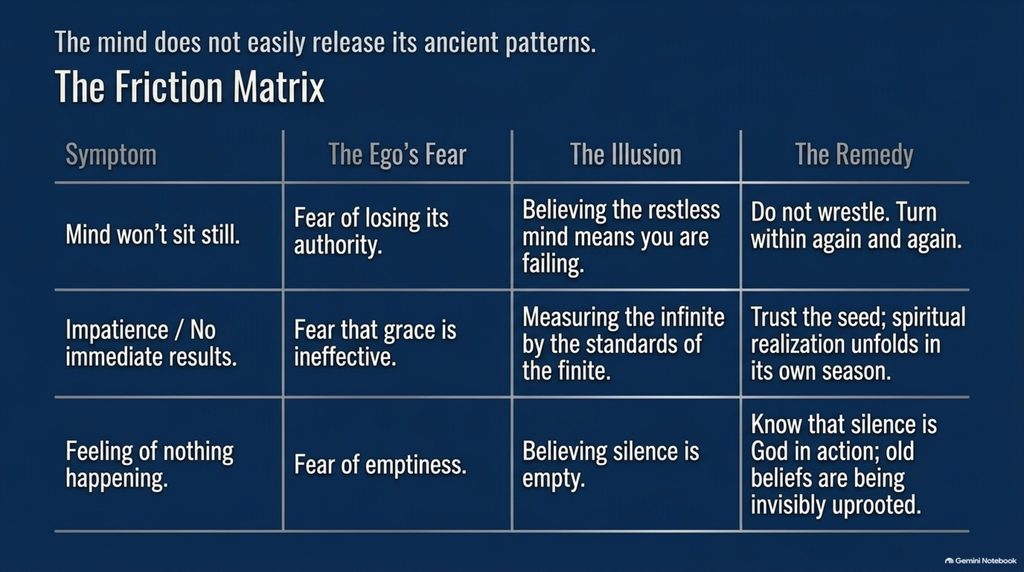
- Silent Recognition: Prayer is not asking, pleading, affirming, or visualizing; it is the silent awareness of what already is—God’s completeness right where you stand.
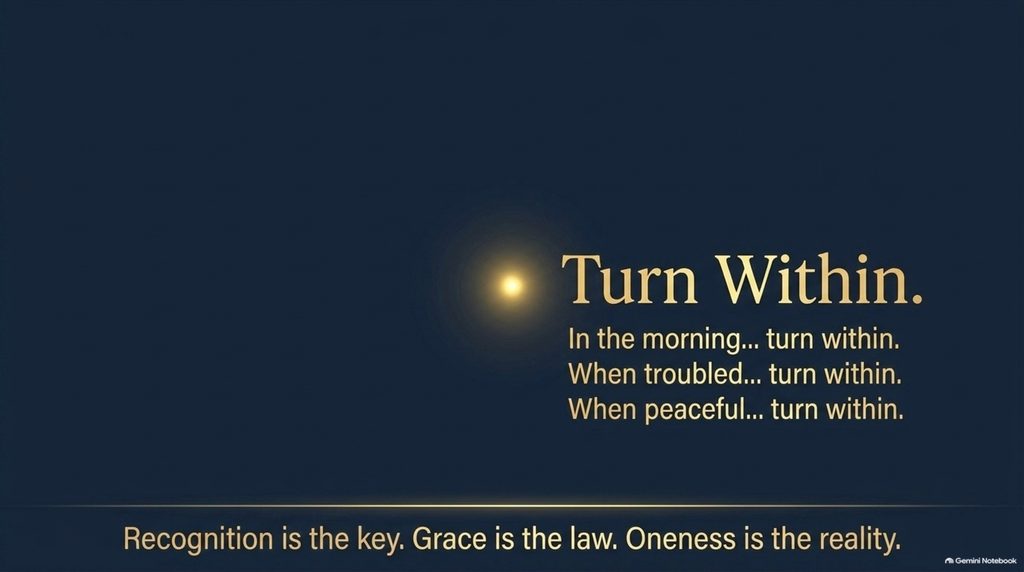
- Abiding in Rest: Rather than sending thoughts outward, prayer is a sacred act of turning within, resting, and surrendering into the truth of the indwelling Presence.
4. How True Prayer Operates
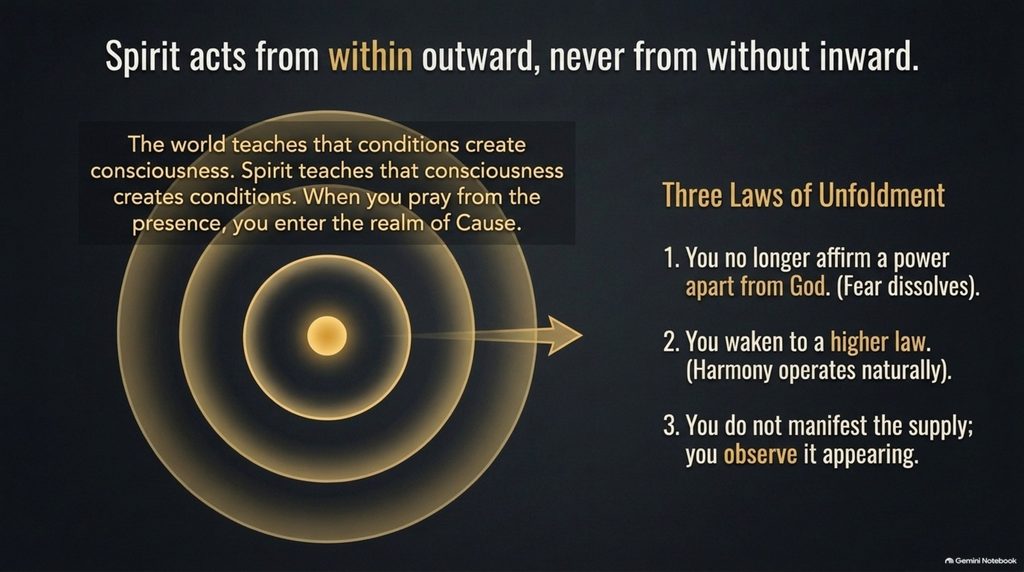
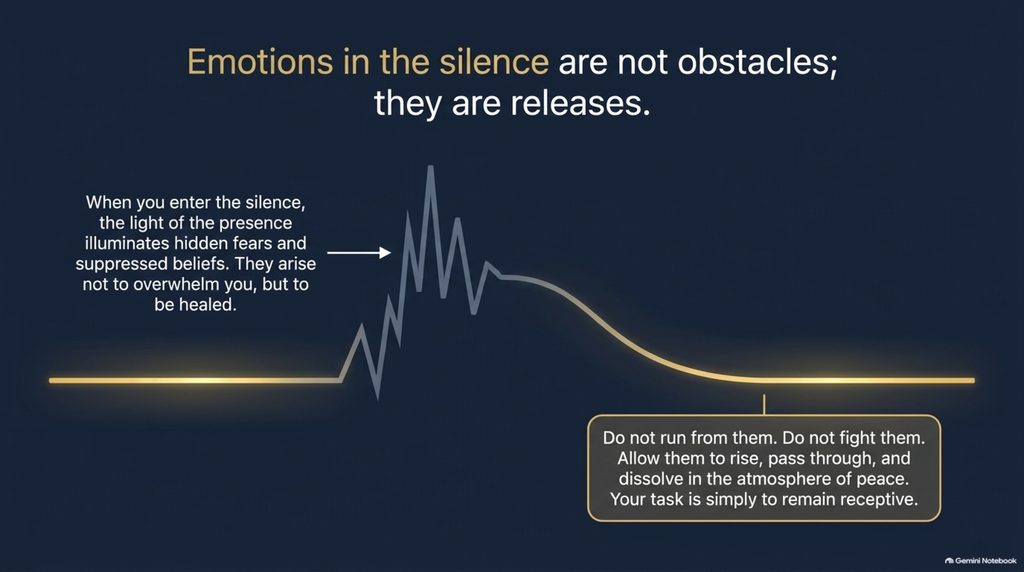
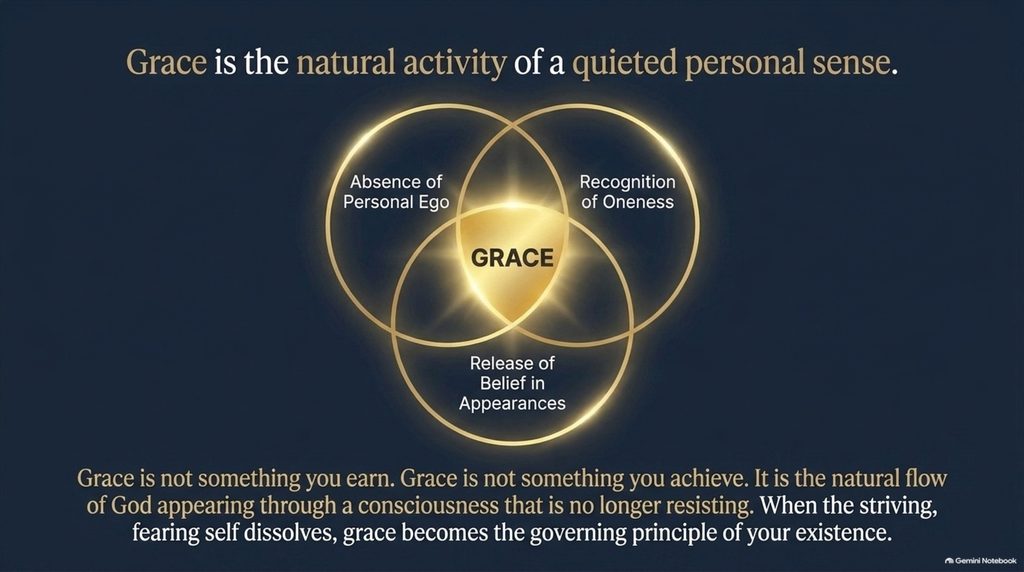
- Withdraws Belief from Appearances: When prayer begins in oneness, it detaches consciousness from outer appearances, causing fear and anxiety to lose their grip without a fight.
- Allows Grace to Act: True prayer requires no human force or mental manipulation. By resting in quiet recognition, the individual becomes an open instrument through which the divine activity of grace, harmony, and wholeness naturally unfolds.
5. Practicing Prayer in Daily Life
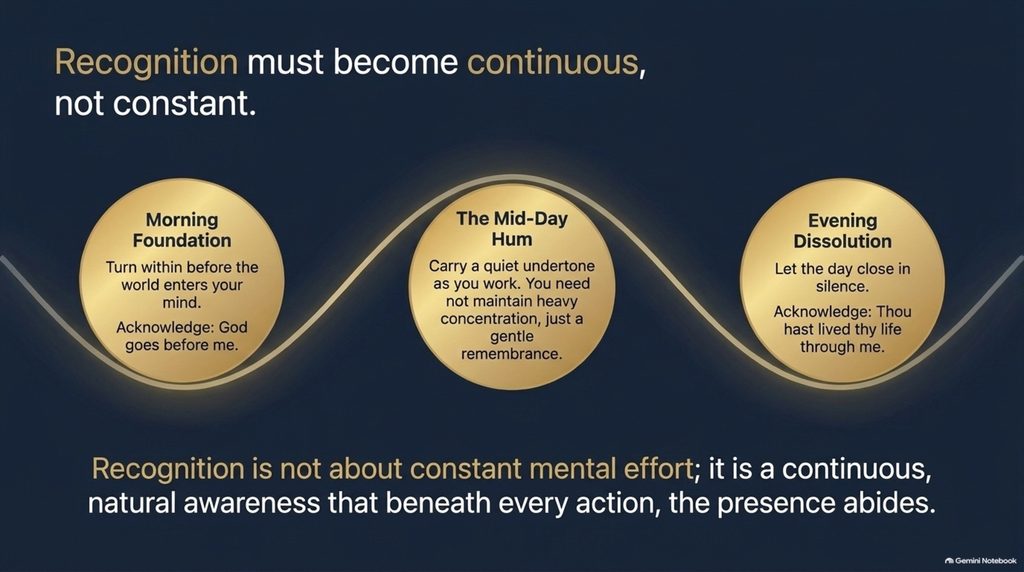
- Continuous Awareness: Prayer is not confined to moments of meditation; it is a continuous, quiet undertone of silence maintained throughout the day.
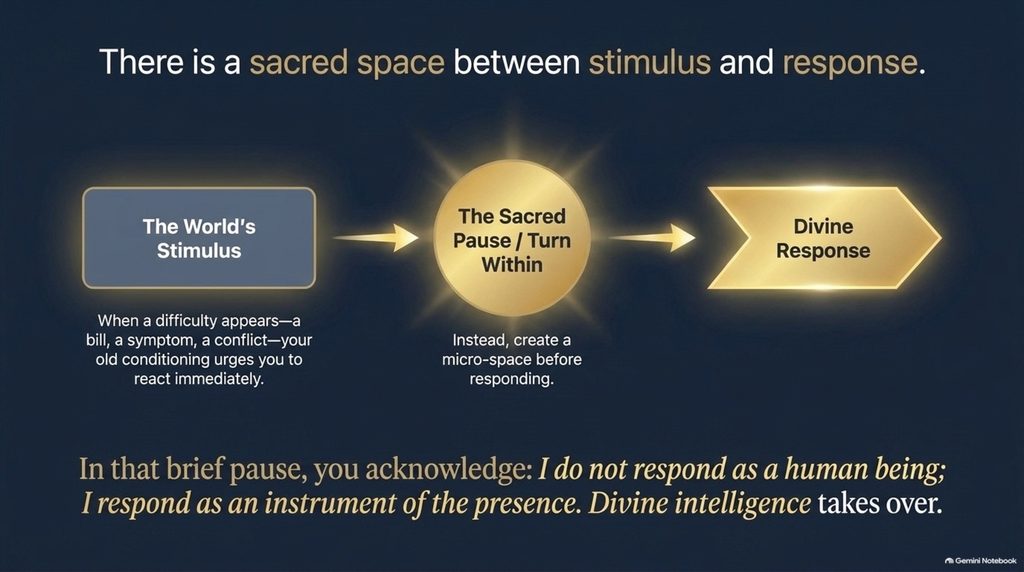
- Turning Within First: Before responding to challenges, conversations, or decisions, one pauses to turn within silently. This brief pause clears fear, aligns consciousness with divine wisdom, and lets grace govern actions.
- Recognizing the Presence in Others: Practicing true prayer involves looking past human behavior or appearances to silently acknowledge the indwelling Christ as the truth of every individual encountered.
✨ Would you like to explore how Goldsmith distinguishes between mental affirmations and true inner silence during meditation?
Leave a Reply