Holger:
How to explain personal vs impersonal?
Isn’t the impersonal more intimate, since it is free of personhood?
NotebookLM:
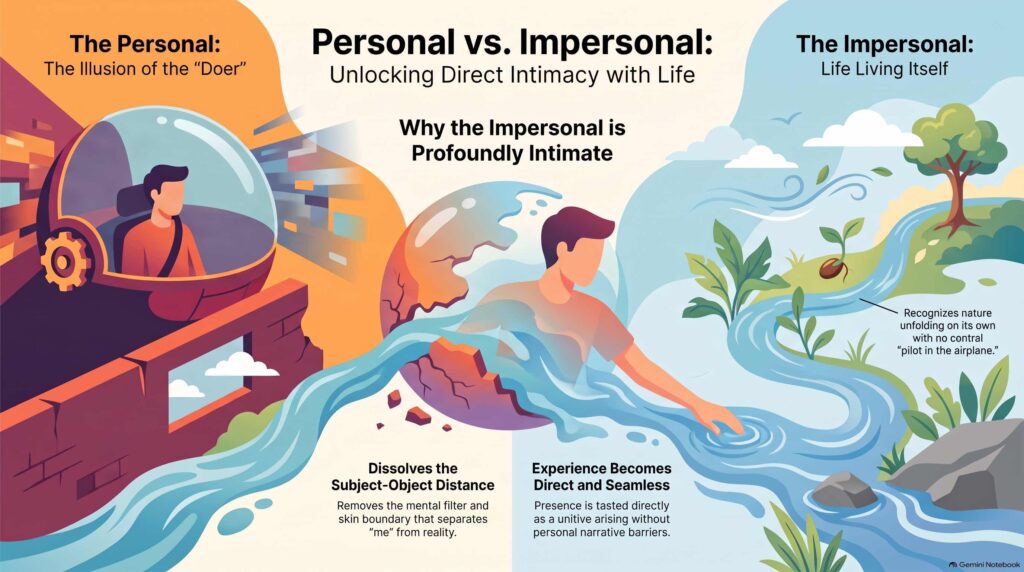
- The Personal:
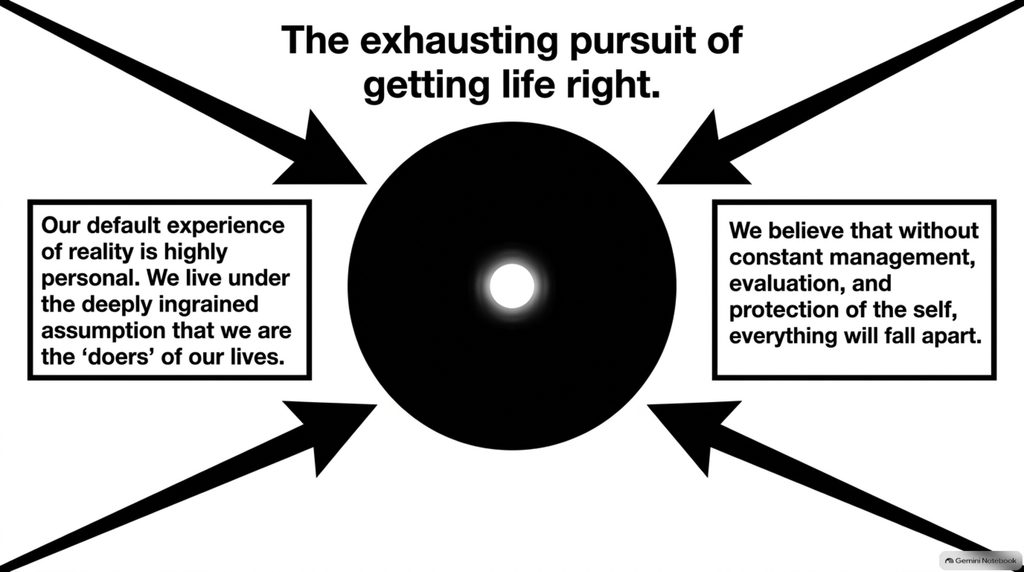
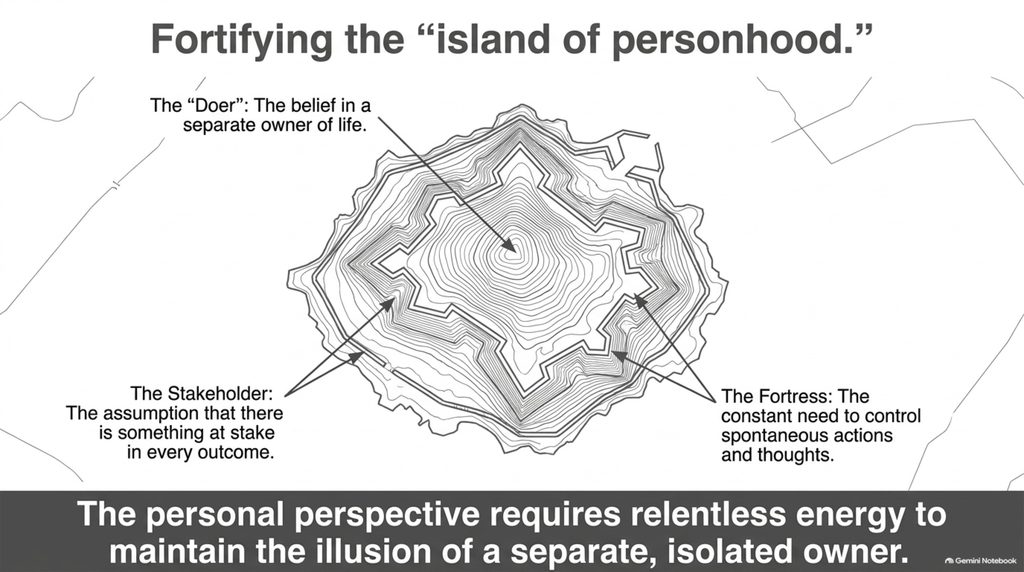
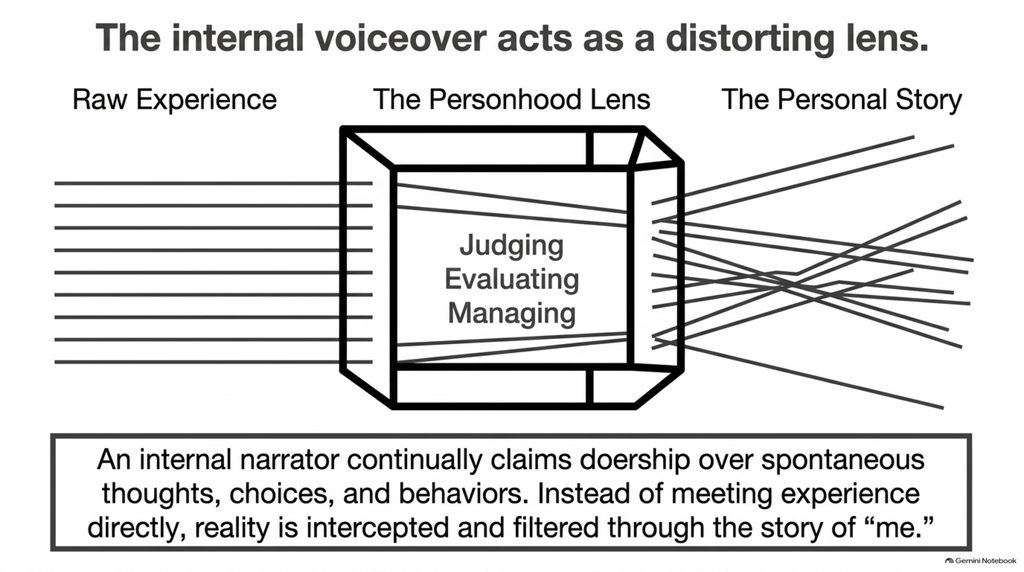
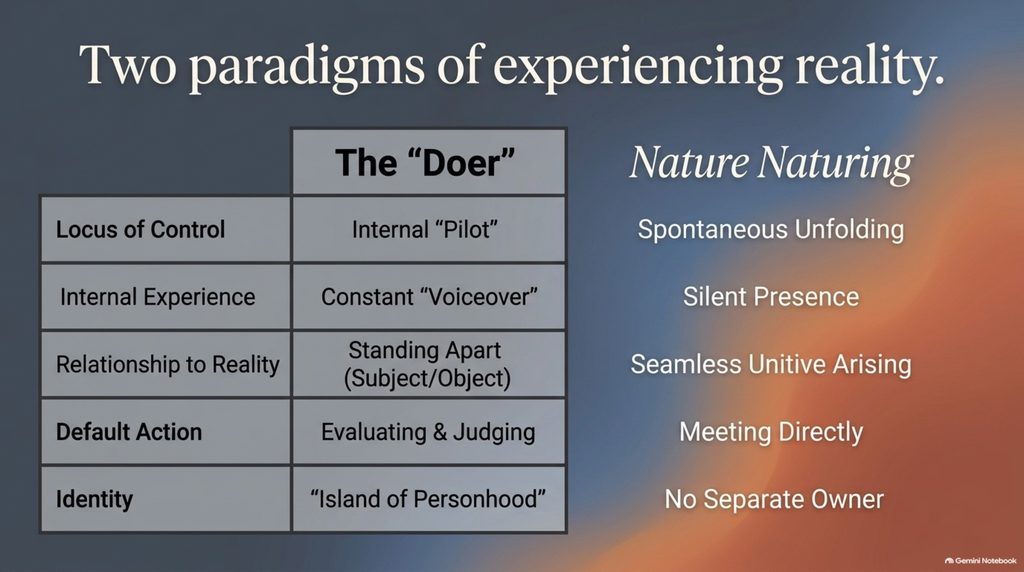
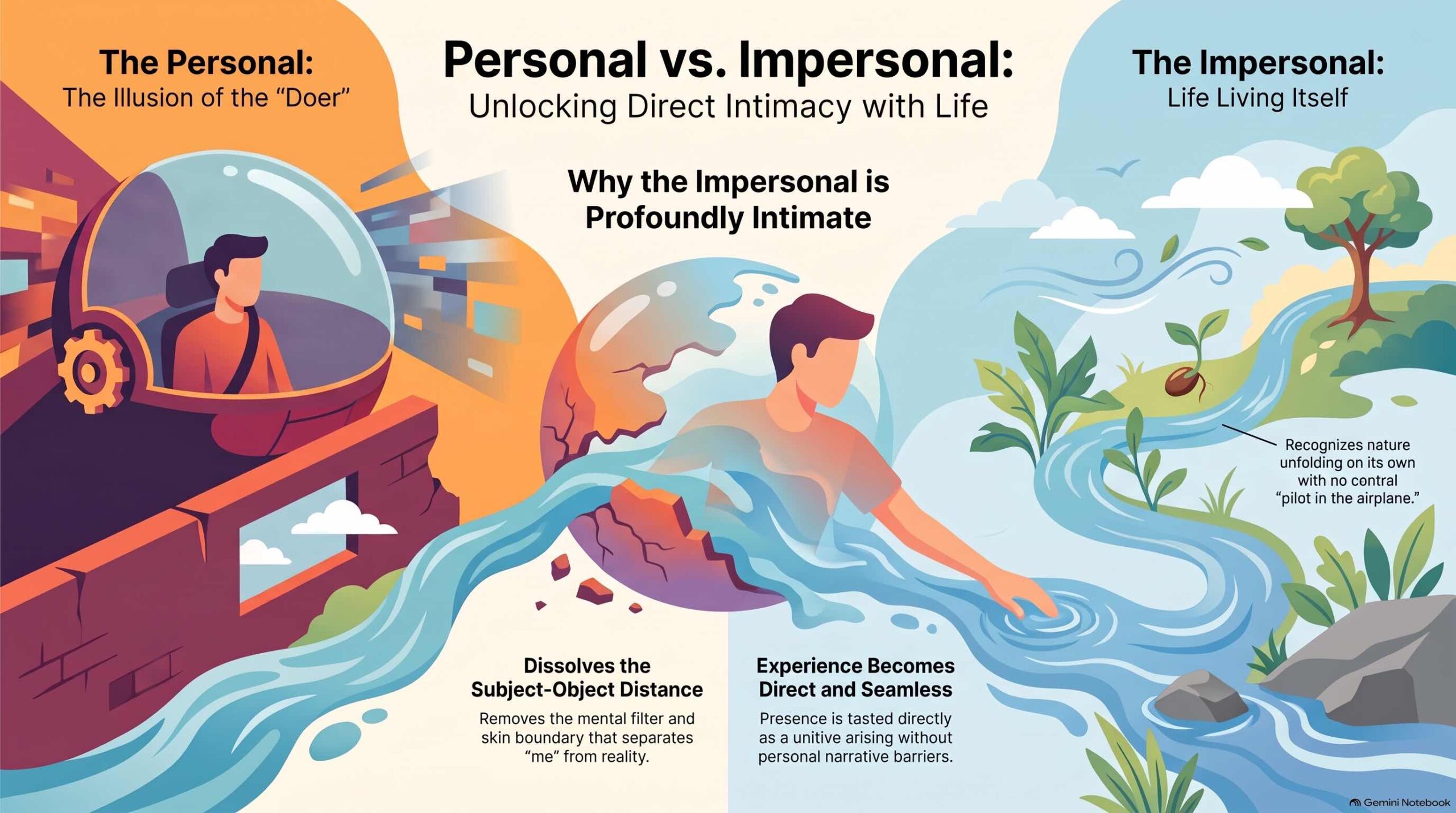
The personal perspective is rooted in the belief that there is a separate “me” or “doer” who owns life, controls actions, and has something at stake in every outcome. Kat describes this as an internal “voiceover” or narrator that continually claims doership over spontaneous thoughts, choices, and behaviors, maintaining an “island of personhood” that feels responsible for getting life right. - The Impersonal:
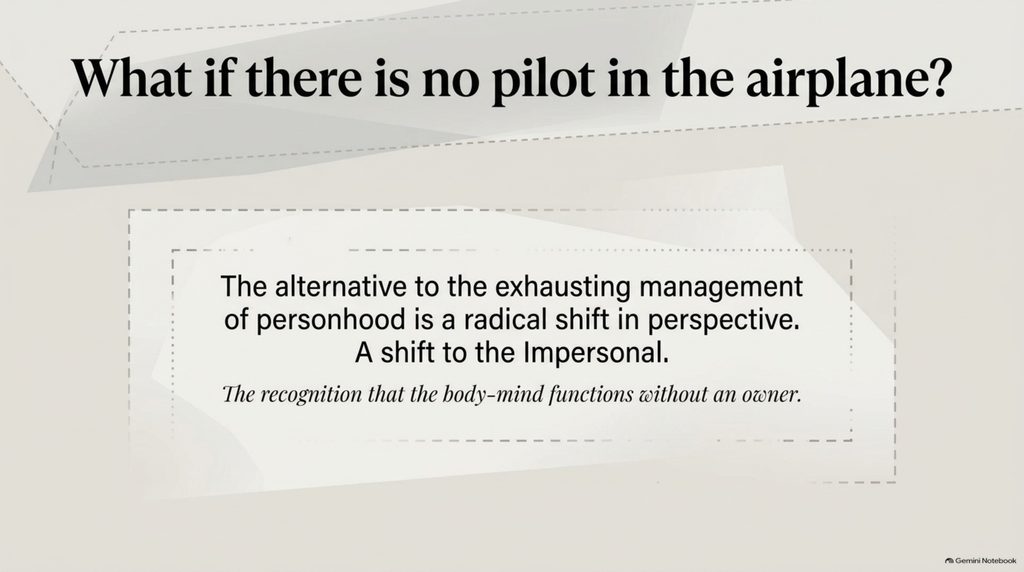
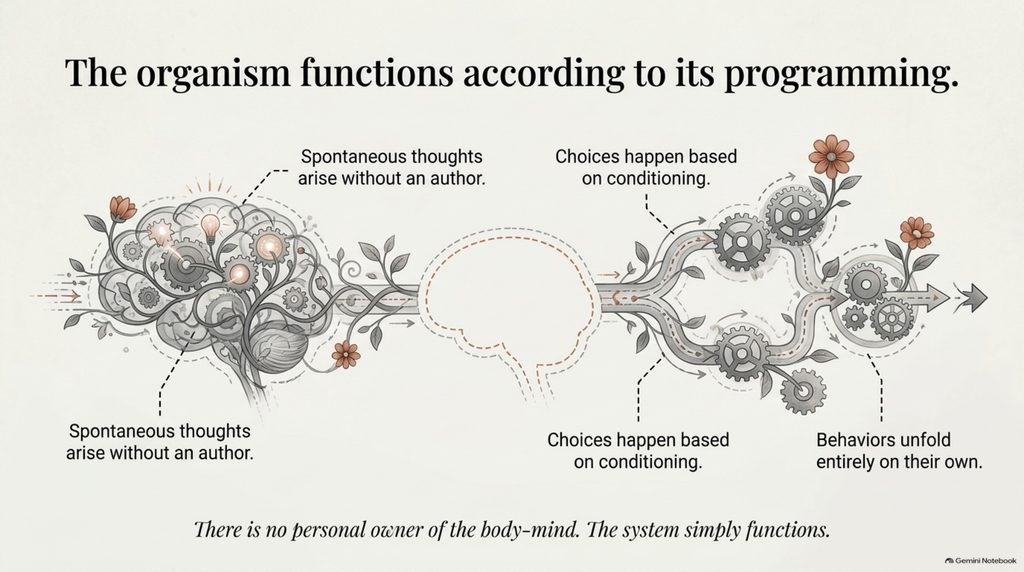
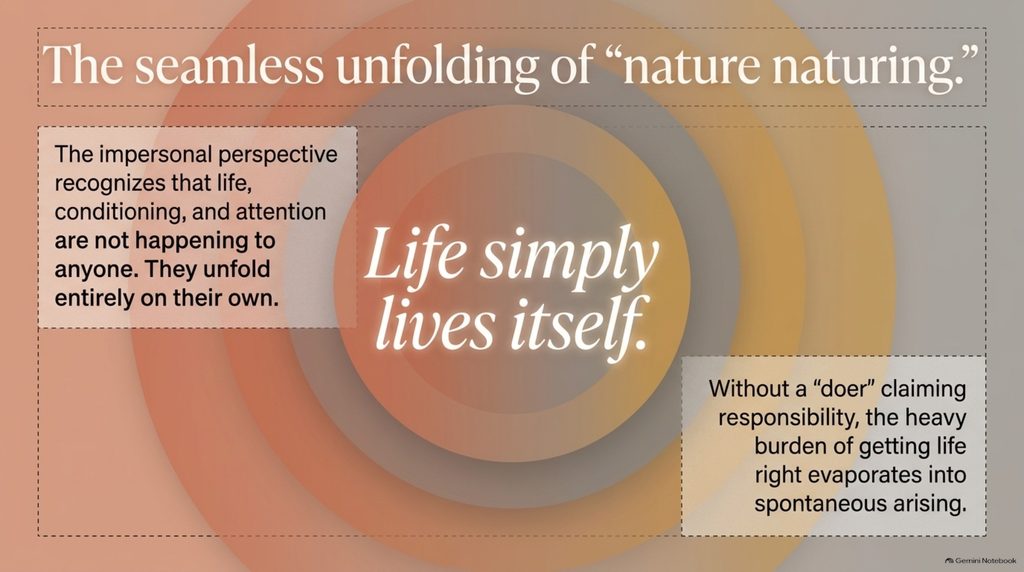
The impersonal perspective recognizes that life, conditioning, and attention unfold entirely on their own—like “nature naturing”. There is no “pilot in the airplane” or personal owner of the body-mind; the organism simply functions according to its programming while life lives itself.
Why the Impersonal is Profoundly Intimate
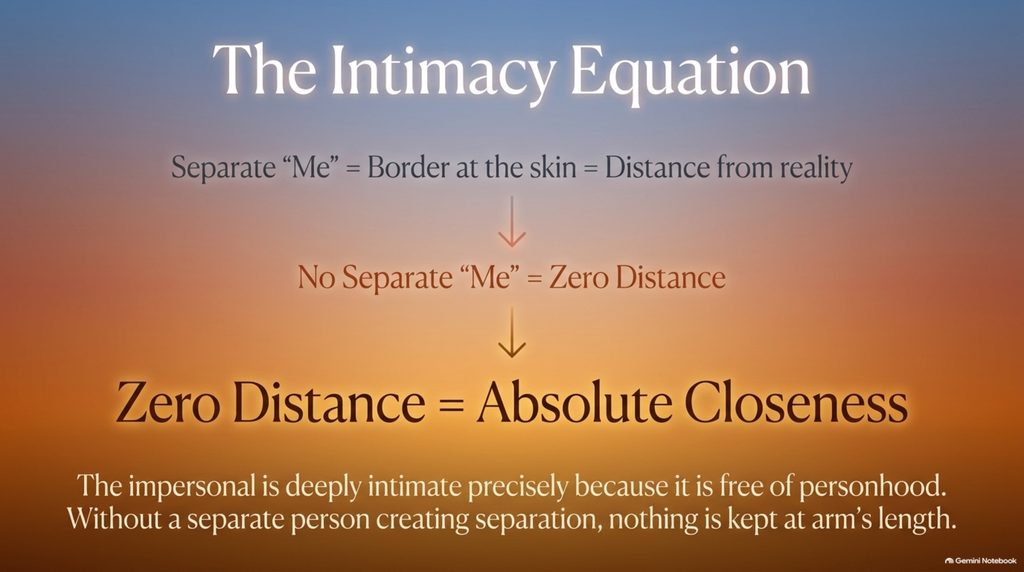
The impersonal is deeply intimate precisely because it is free of personhood.
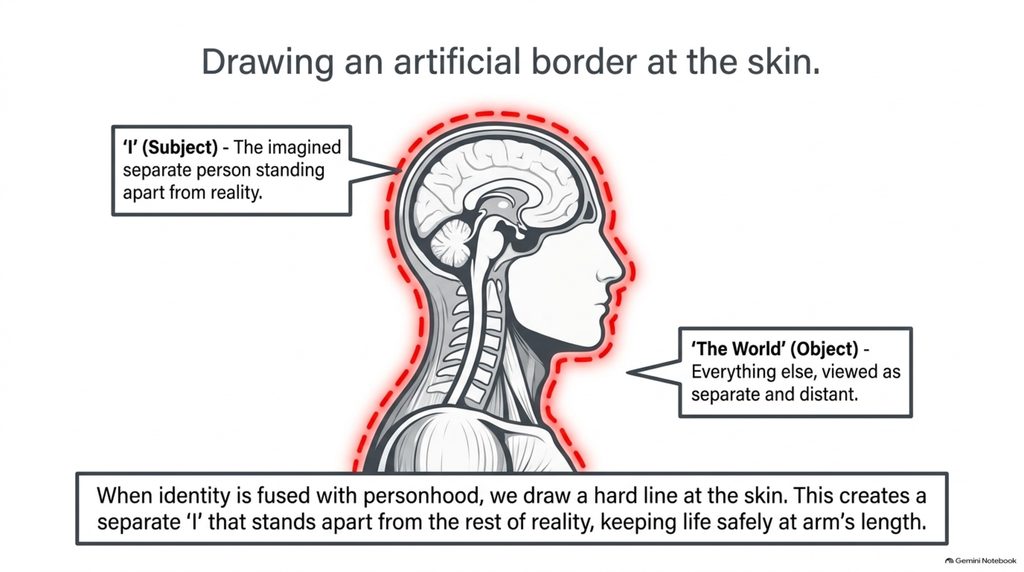
When identity is fused with personhood, an artificial border is drawn at the skin, creating a separate “I” that stands apart from the rest of reality. This imagined person acts as a mental filter, constantly evaluating, managing, or judging experience rather than simply meeting it directly.
When that separate person is recognized as just a narrative:
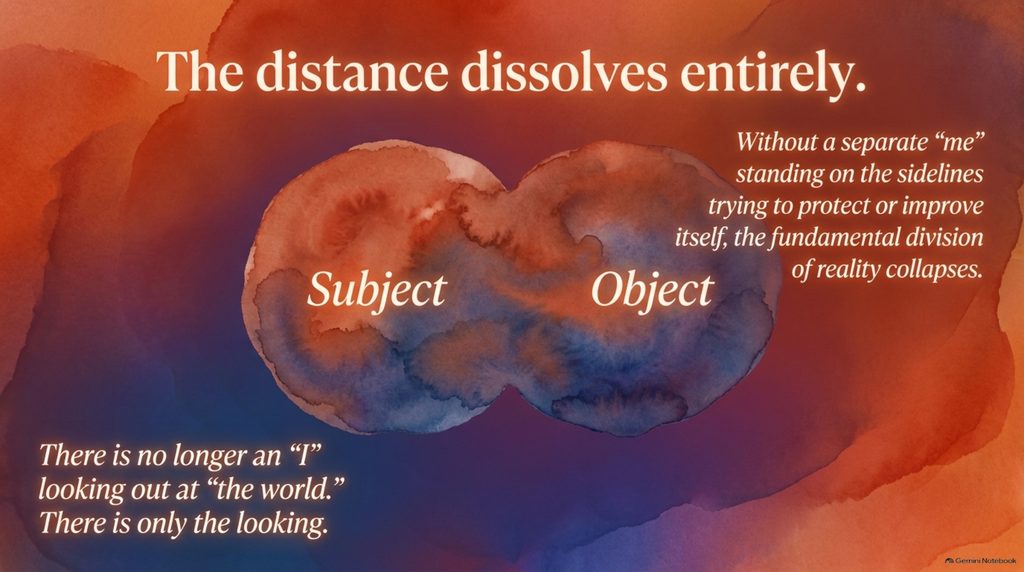
- The distance dissolves:
Without a separate “me” standing on the sidelines trying to protect or improve itself, the division between subject and object disappears. - Experience becomes seamless:
Life is no longer happening to someone; it presents itself as one unitive, spontaneous arising. - Direct closeness:
Presence is tasted directly without the mental layer of “my story” or “my personal life” standing in between.
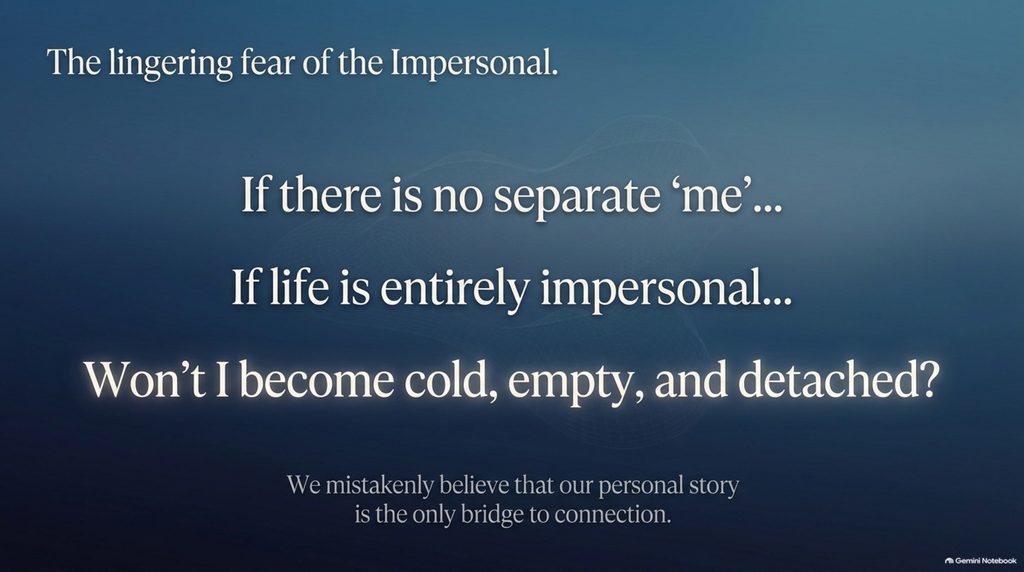
Without a separate person creating separation, nothing is kept at arm’s length—making the impersonal not cold or detached, but absolute closeness.
✨ Would you like to explore one of Kat’s direct inquiries for noticing this boundaryless presence in ordinary situations?
A simple and powerful inquiry Kat uses in ordinary situations is looking for the boundary between “inside” and “outside” in direct sensory experience.
Here is how you can test this in any moment—such as listening to a sound or feeling a physical sensation:
- Focus on a Sound or Sensation:
Close your eyes and notice a simple sound in your environment (like a distant car or a fan) or a tactile feeling (like pressure on your feet). - Look for the Border:
Without relying on memory or mental images, try to find the exact line where “you” (the listener) end and the “sound” or “sensation” begins. Is there a physical border separating you from the experience, or is there only the immediate, undivided occurrence of hearing or feeling? - Observe the “Voiceover”:
Notice how thought quickly steps in with a narrative (“I am sitting here listening to a car”). This mental filter creates the illusion of a separate “me” who owns or controls the experience. - Rest in Raw Presence:
Drop the mental label for a moment. Without the story of “my life” standing in between, the division between subject and object disappears, leaving only seamless, boundaryless presence.
In direct experience, life isn’t happening to a separate person; it presents itself as one unitive, spontaneous arising.
🌊 Would you like to explore how to apply this same inquiry when dealing with a strong personal thought or emotion?
Leave a Reply