God Is Not a Being — And Mystics Knew It
Detailed Summary (via getrecall.it)
Mystical Perspectives on Being and Awareness
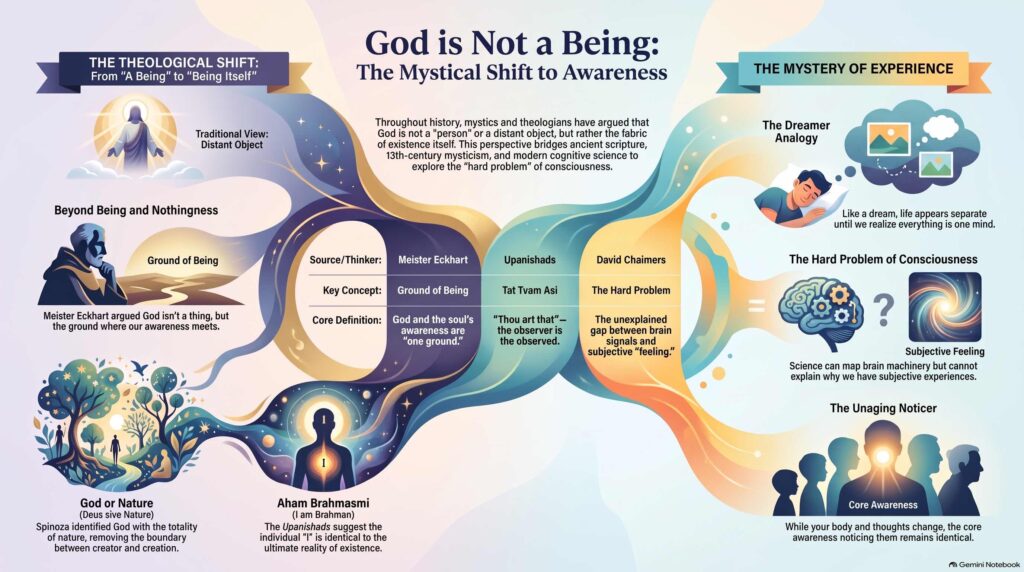
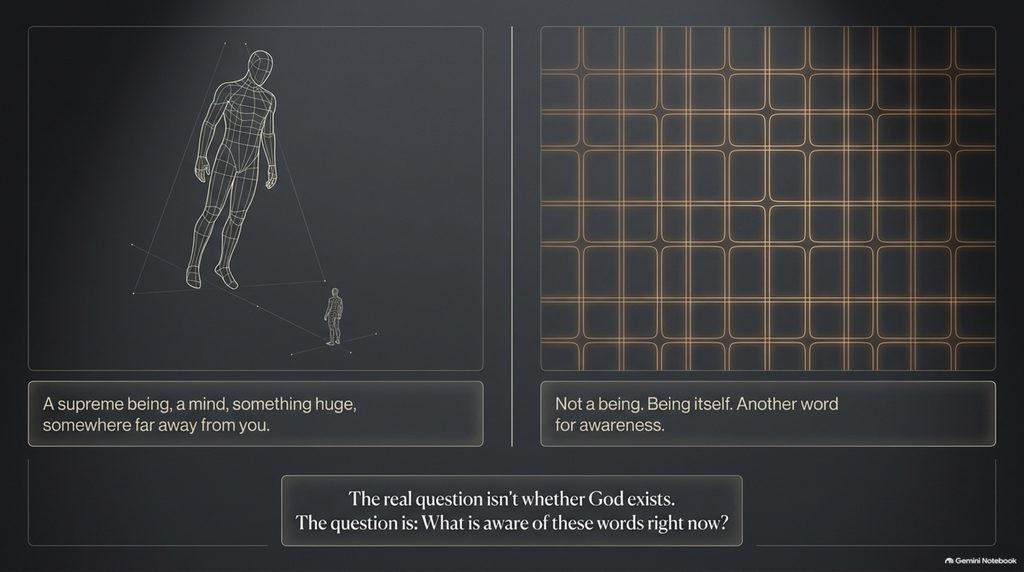
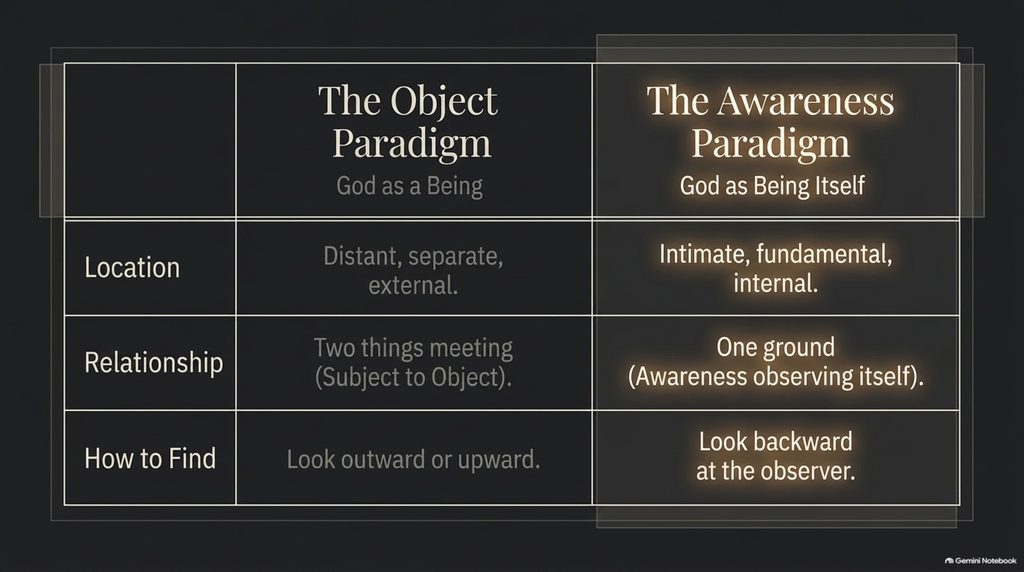
- The common perception of God as a distant, massive being is contrasted with the mystical perspective that God is “being itself” or “isness.” (00:00:00)
- Awareness is proposed as a potential synonym for being, and individuals are encouraged to observe their own awareness, which cannot be seen, heard, or touched, yet remains the one thing that is never doubted. (00:00:20)
Historical Theological and Philosophical Perspectives
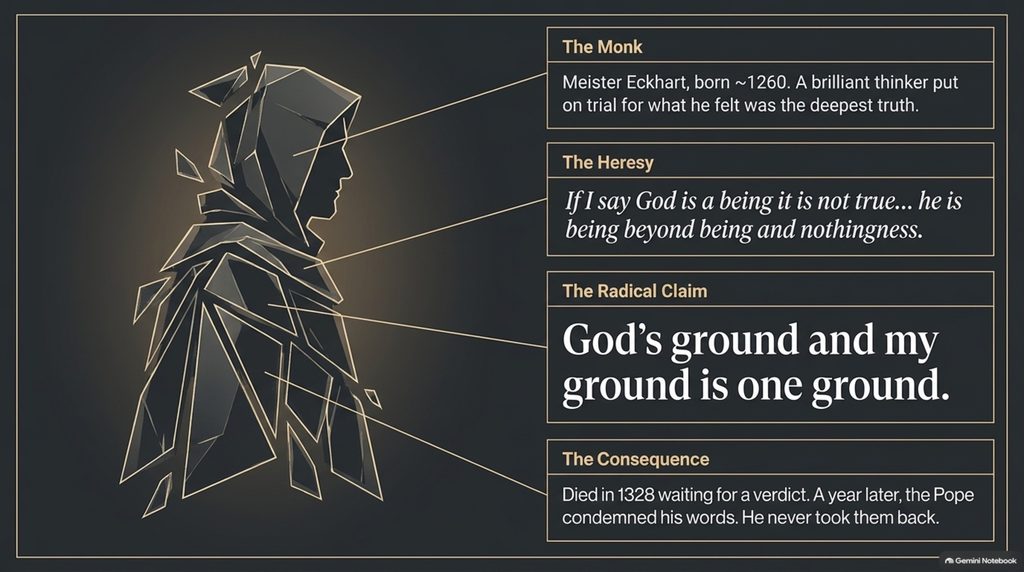
- Meister Eckhart, a German monk born around 1260, faced a trial by the church for his theological assertions, including the claim that God is “being beyond being” and that the ground of God and the ground of the individual are one. (00:01:12)
- Eckhart died in 1328 without retracting his teachings, and a year later, the Pope declared some of his statements to be erroneous. (00:01:56)
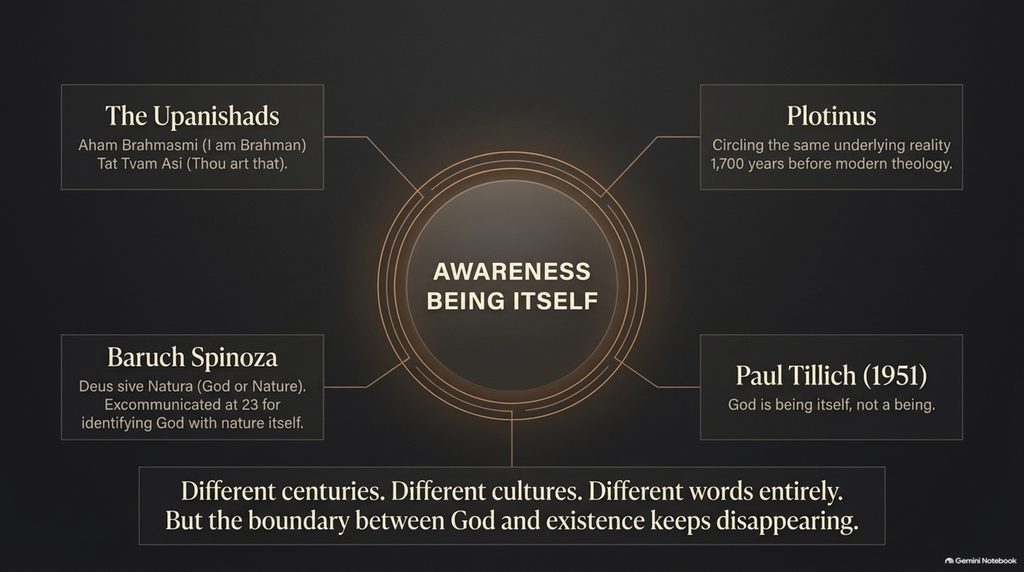
- The theologian Paul Tillich echoed the idea in 1951 that God is “being itself” rather than a being. (00:02:34)
- The philosopher Plotinus explored similar concepts 1,700 years prior to Tillich, while Baruch Spinoza identified God with nature, a concept he termed “Deus sive natura,” which led to his excommunication at age 23. (00:02:42)
Non-Duality and the Nature of Reality
- The Upanishads express the concept of non-duality through phrases such as “Aham Brahmasmi” (I am Brahman) and “Tat Tvam Asi” (Thou art that). (00:03:10)
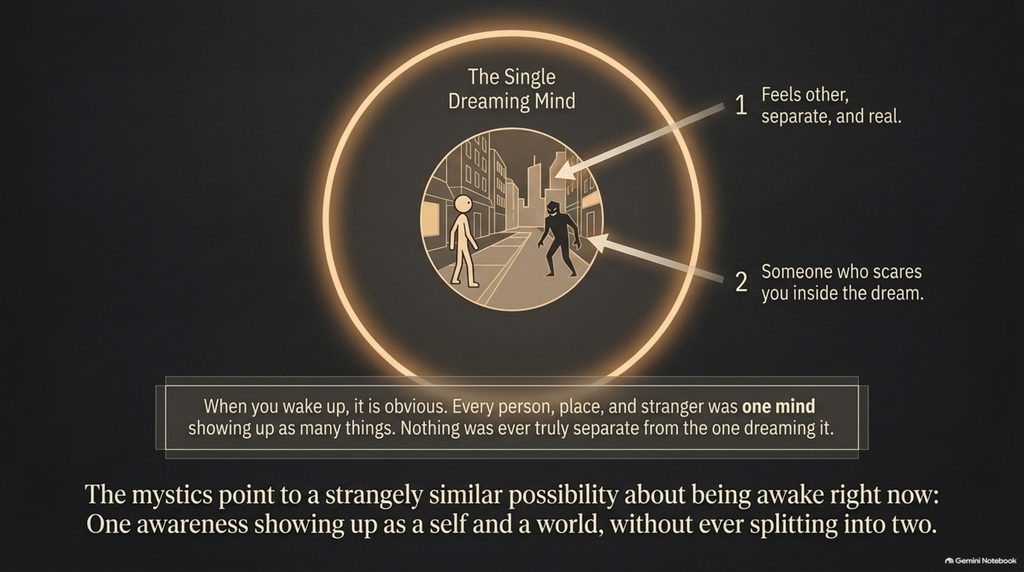
- The nature of reality is compared to a dream, where a single mind creates multiple, seemingly separate elements that are, in fact, not separate from the dreamer. (00:03:34)
- Mystics suggest that the experience of being awake involves one awareness manifesting as both a self and a world without actually splitting into two. (00:04:06)
The Constant Nature of Awareness
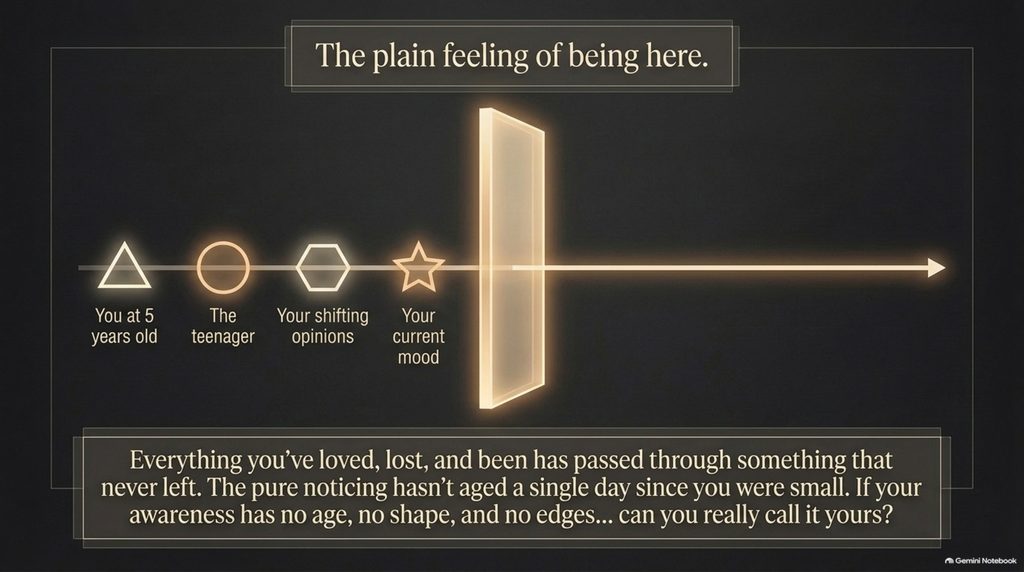
- While personal identity, physical appearance, and moods change over time, the fundamental feeling of awareness remains constant from childhood through adulthood. (00:04:21)
- The concept of awareness having no age, shape, or edges raises the question of whether it can truly be considered personal property. (00:05:06)
Self-Inquiry and the Nature of the Self
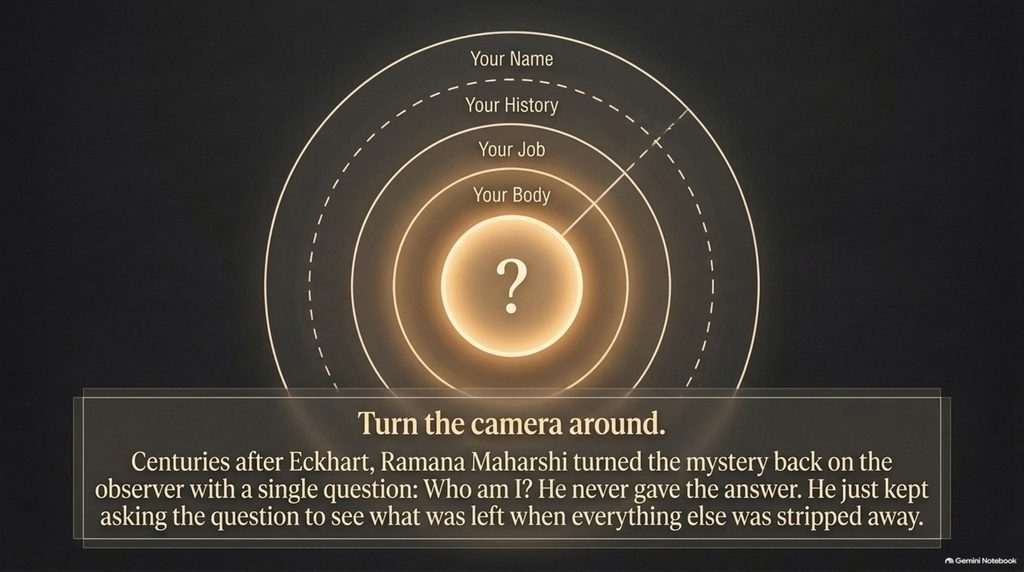
- The fundamental certainty of existence is that experience is occurring, a concept explored by Ramana Maharshi through the practice of self-inquiry. (00:05:26)
- Ramana Maharshi encouraged individuals to look past their names, histories, and occupations to discover what remains of the self. (00:05:32)
The Hard Problem of Consciousness
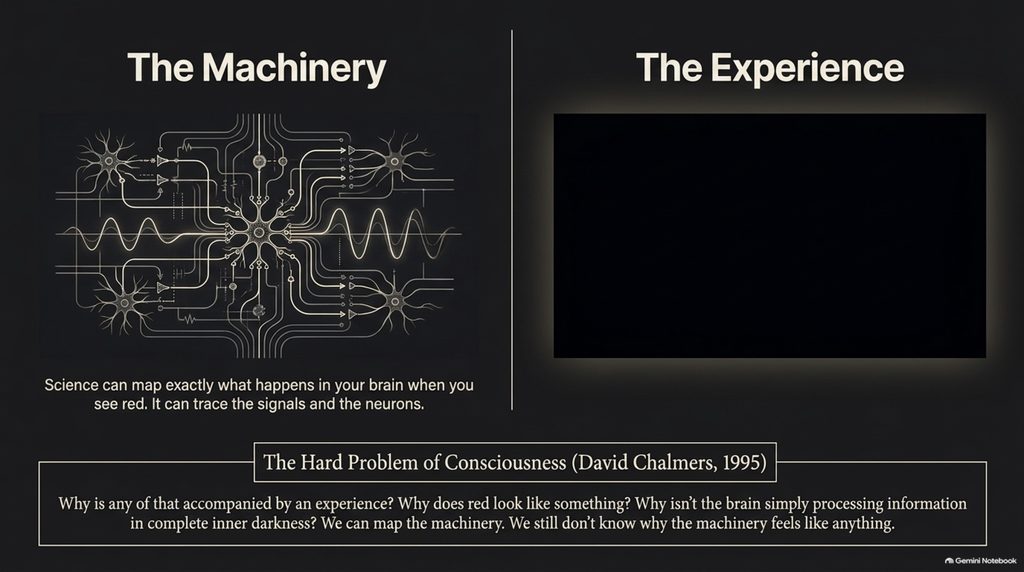
- While science can map the neural signals and electrical activity in the brain associated with sensory input, it cannot explain why these processes are accompanied by subjective experience. (00:05:56)
- The question of why brain activity feels like something, rather than occurring in complete inner darkness, remains unanswered by science. (00:06:08)
- In 1995, David Chalmers coined the term “the hard problem of consciousness” to describe the lack of a widely accepted explanation for why physical brain activity results in subjective experience. (00:06:23)
The Subjective Nature of Experience
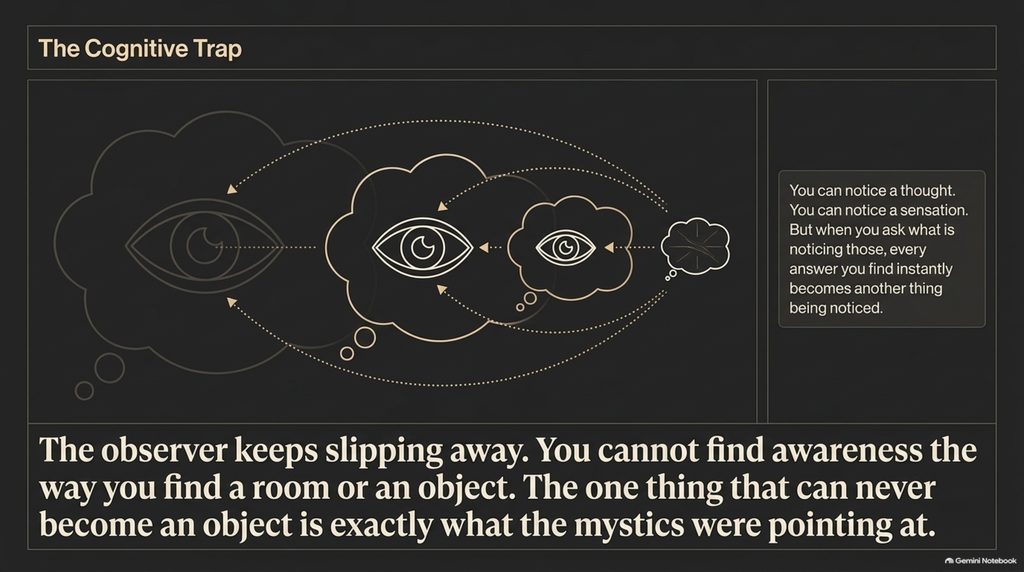
- Awareness cannot be observed in the same way as a thought, a room, or a sensation because any attempt to identify the observer results in the observer becoming another object of notice. (00:06:45)
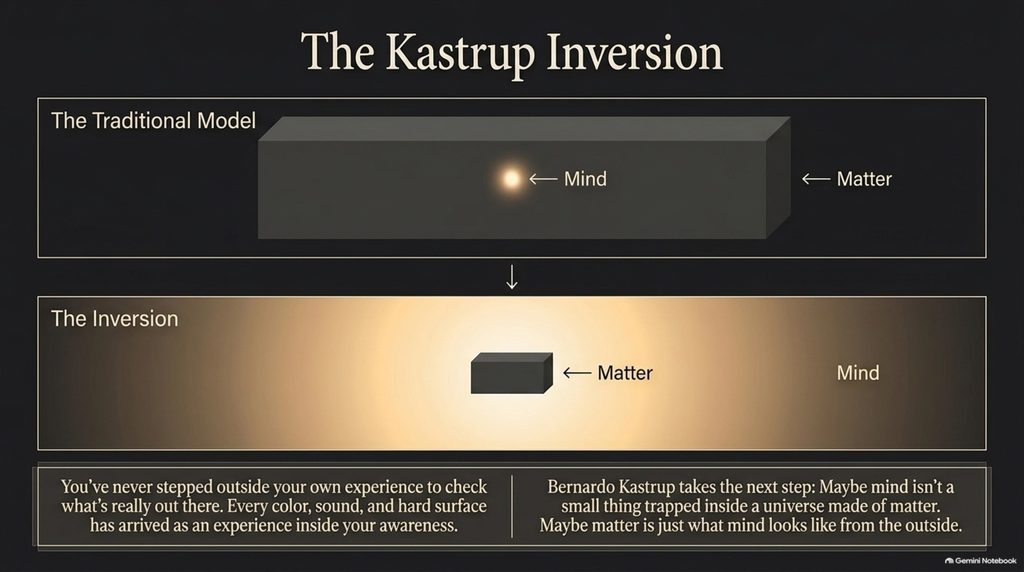
- Because individuals cannot step outside of their own awareness to verify the nature of the external world, every known object or sound is experienced only as a phenomenon within that awareness. (00:07:19)
- Bernardo Kastrup proposes that rather than the mind being a small entity trapped within a material universe, matter may simply be the external appearance of the mind. (00:07:56)
The Divine and the Observer
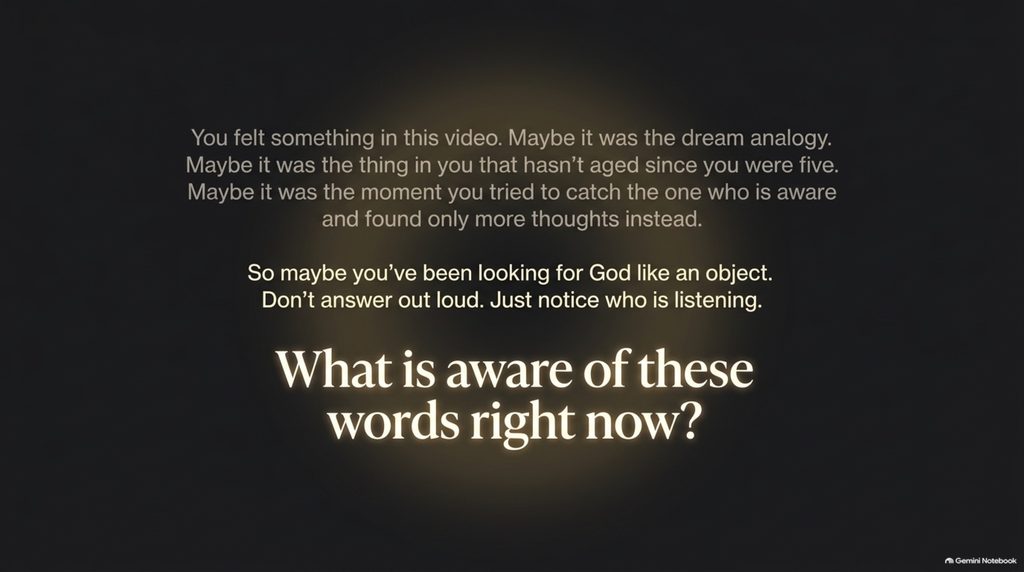
- The search for God may be fundamentally flawed if it is approached as a search for an object, as mystics suggest that the divine is the one thing that cannot be objectified. (00:08:27)
- The nature of awareness can be explored by shifting focus toward the entity that is currently listening to or perceiving information. (00:08:40)

Leave a Reply